The Clients You Never Forget
When I worked as a real estate broker, I met hundreds of people, some practical, some nervous, some wildly optimistic, and some who just wanted the paperwork done as quickly as possible so they could get on with their lives. Most transactions blur together after a few years, addresses replaced by newer listings and faces…
When I worked as a real estate broker, I met hundreds of people, some practical, some nervous, some wildly optimistic, and some who just wanted the paperwork done as quickly as possible so they could get on with their lives.
Most transactions blur together after a few years, addresses replaced by newer listings and faces fading into contracts and closing dates.
But every once in a while, there is a client who refuses to disappear from your memory, not because the deal was complicated, but because the person and the house felt alive in a way that made you pause.
Katy was one of those people.
She bought her old home just over ten years ago, back when I was still juggling open houses, inspections, and coffee that never seemed strong enough.
I no longer sell homes, and I laugh now thinking about how far away that version of my life feels, but her house, and especially her bedroom, stayed with me in a way I never expected.
Meeting Katy

Katy walked into our first showing wearing paint-splattered boots, an oversized coat that smelled faintly of turpentine, and a scarf that looked like it had been dyed by hand.
She told me she was a free artist before I even asked what she did for a living.
She lived alone, preferred silence to small talk, and once mentioned her zodiac sign, Scorpio, with a half-smile that suggested she knew exactly what kind of reputation that came with and did not feel the need to defend it.
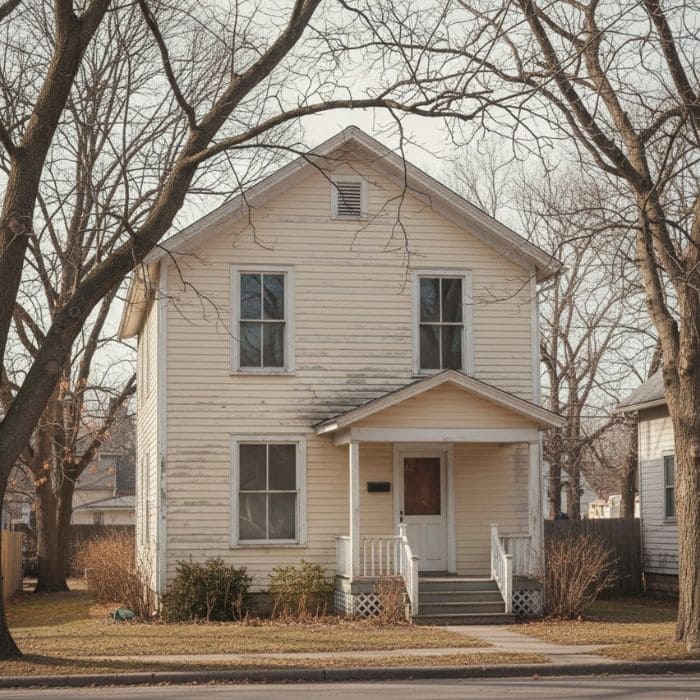
She was looking for an old and imperfect home.
The house she chose sat on a quiet residential street, lined with mature trees that leaned toward the road as if they had been watching generations pass.
The exterior was modest, slightly weathered, with original clapboard siding that had been repainted more times than anyone could count, and windows that still held the faint distortions of old glass.
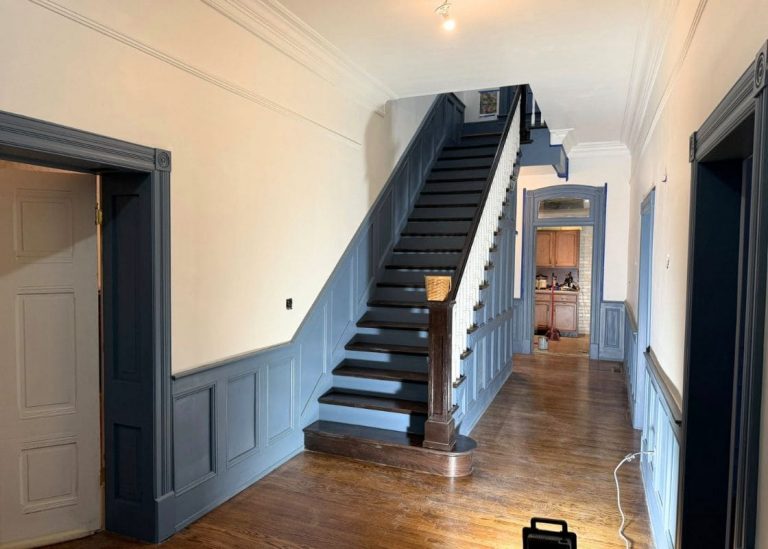
The house itself had good bones in the quiet way older homes do. The floors sloped just enough to remind you that gravity and time had been negotiating for decades.
The doors were solid wood, heavy in your hand, with knobs that felt cool even in summer.
Also, the ceilings were higher than modern standards, trimmed with delicate molding that had softened over time but never disappeared.
Decorating Without Asking Permission
After she bought the house, Katy did what most people would never dare to do. She didn’t hire a designer, didn’t follow trends, and didn’t worry about resale value.
She treated the house like a sketchbook, moving slowly, trusting her instincts, and allowing rooms to evolve instead of finishing them.
Every corner became intentional. Shelves held small collections that looked accidental but clearly weren’t, found objects arranged with an artist’s eye for balance.
Dried herbs hung from hooks not as décor but because she actually used them. Walls were painted in deep, muted tones that changed character throughout the day, mossy greens in the morning, shadowy and warm at night.
The living areas felt layered rather than styled, filled with textures instead of statements. But the bedroom was where everything came together.
The Bedroom That Stopped Me Cold
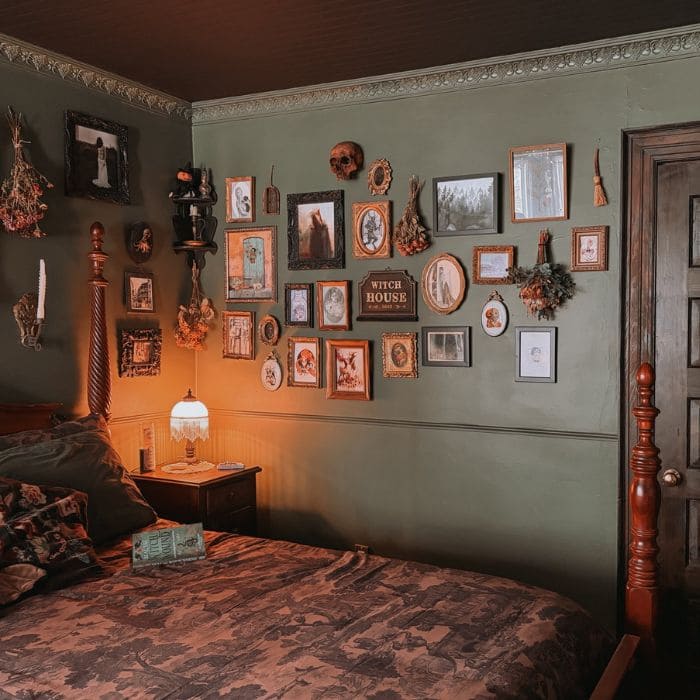
The first time I saw Katy’s bedroom after she had finished it, I stood quietly in the doorway longer than was probably polite.
The walls were painted a deep, earthy green, the kind that makes everything else feel grounded.
Against it, dark wood furniture stood confidently, a solid bed frame with turned posts, a dresser that had clearly lived another life somewhere else, and a nightstand that looked hand-chosen rather than matched.
The bed was dressed in richly patterned linens, layered and slightly rumpled, as if perfection had never been the goal.
Above the bed, a gallery wall unfolded like a personal archive. Small antique frames, some gilded and worn, others simple and dark, held a mix of photographs, illustrations, and strange little relics.
There were botanical prints, faded portraits, a small skull mounted carefully, and handwritten labels that hinted at stories only Katy fully knew.
Light, Texture, and Silence
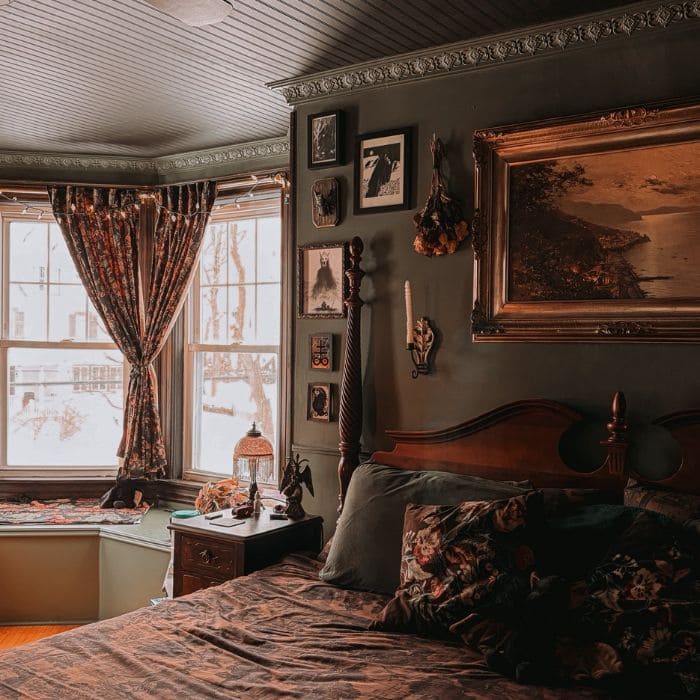
Natural light filtered in through tall windows dressed in heavy curtains that could shut the world out completely when needed.
In the afternoon, the room glowed softly, the green walls warming into something almost golden. At night, small lamps created pockets of light instead of flooding the space, making the room feel intimate and protective.
One corner held a chair that looked like it had been claimed rather than placed, draped with a wool blanket and a pillow embroidered with quiet pride.
Nearby, a fireplace stood unused but lovingly styled, its mantle holding objects that felt ceremonial rather than decorative. Candlesticks, small sculptures, and dried flowers rested there as if waiting patiently.
The ceiling, often ignored in most homes, was finished with subtle detail that pulled your eye upward without demanding attention.
Even the trim and moldings were respected, painted thoughtfully so they framed the room instead of fading away.
A Space That Reflected Its Owner
What struck me most wasn’t any single object, but the way the room felt like Katy herself. Independent, slightly mysterious, deeply personal, and unconcerned with outside approval. She had built the space slowly, alone, trusting her taste completely, and the result was a room that felt lived in rather than staged.
She once told me she rearranged things constantly, moving frames by inches, swapping objects between rooms, letting the house tell her when something felt wrong. That freedom, the absence of rules, was what made the space work.
Why It Stayed With Me
Years later, long after I stopped selling houses, I still think about that bedroom when I see overly polished interiors that feel empty despite their expense.
Katy’s home reminded me that the most memorable spaces aren’t created by budgets or trends, but by patience, courage, and a willingness to live honestly inside your own taste.