Our First Visit to A White Southern Home on Maple Grove Avenue
Knock, knock, knock… our first door opens The sound echoed softly under the covered porch as we stood in front of a white Southern home on Maple Grove Avenue, a quiet residential street just beyond the historic center of Greenville, Alabama. The street curved gently, lined with oak trees whose branches met overhead, creating a…
Knock, knock, knock… our first door opens
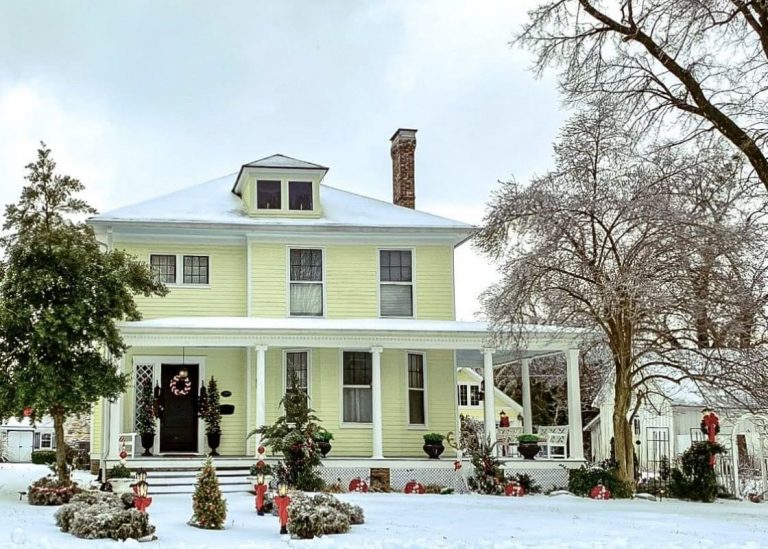
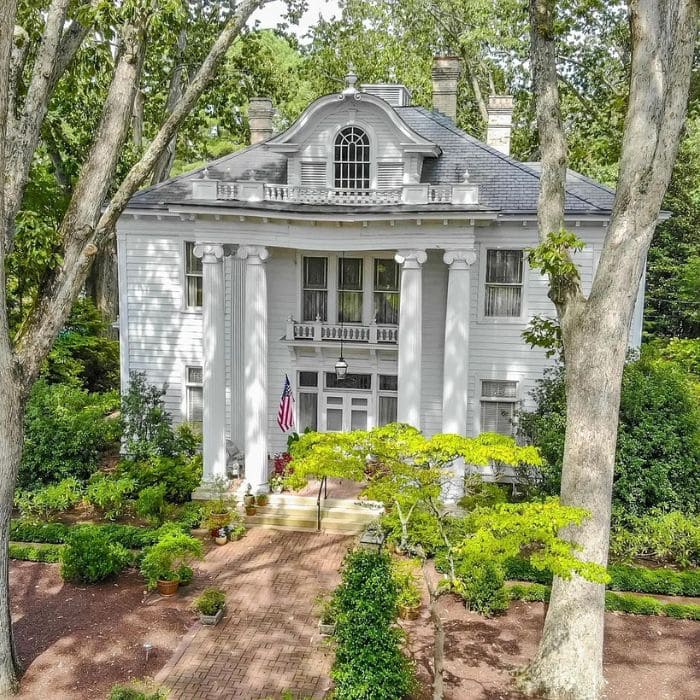
The sound echoed softly under the covered porch as we stood in front of a white Southern home on Maple Grove Avenue, a quiet residential street just beyond the historic center of Greenville, Alabama.
The street curved gently, lined with oak trees whose branches met overhead, creating a canopy that filtered the light and made the entire block feel slower than the rest of town.
It was one of those mornings where the air felt settled rather than busy, and I thought that if a house ever wanted to be visited, this felt like the right moment.
This was our first official house tour, and even after decades of walking into other people’s homes, I felt a familiar pause before the door opened, the kind that only happens when you know a place has a story worth hearing.
The house sat slightly back from the road, approached by a brick walkway softened at the edges from years of use.
Four tall white columns framed the front porch, their paint not perfect but intact, showing care rather than restoration. An American flag hung quietly to one side, moving only when the breeze felt like it mattered.
A Home That Chose Balance Over Display
Margaret Collins opened the door with a warm, unhurried smile. She had lived here for more than three decades and greeted us like people who were expected rather than scheduled.
As she stepped aside, she rested her hand on the original brass handle and said, almost casually, “This house doesn’t like to be rushed.”
She explained that the house was built in 1918, commissioned by a cotton merchant who wanted something strong and symmetrical without unnecessary decoration.
The goal, she said, had never been to impress the street but to serve the people inside it, and that intention still shaped how the house felt the moment you crossed the threshold.
From the porch, Maple Grove Avenue appeared unchanged, and Margaret mentioned that when she and her husband Thomas moved in during the late 1980s, the same trees shaded the same sidewalks, and neighbors still waved from their yards instead of from behind car windows.
The Entry Hall Where Movement Naturally Slows
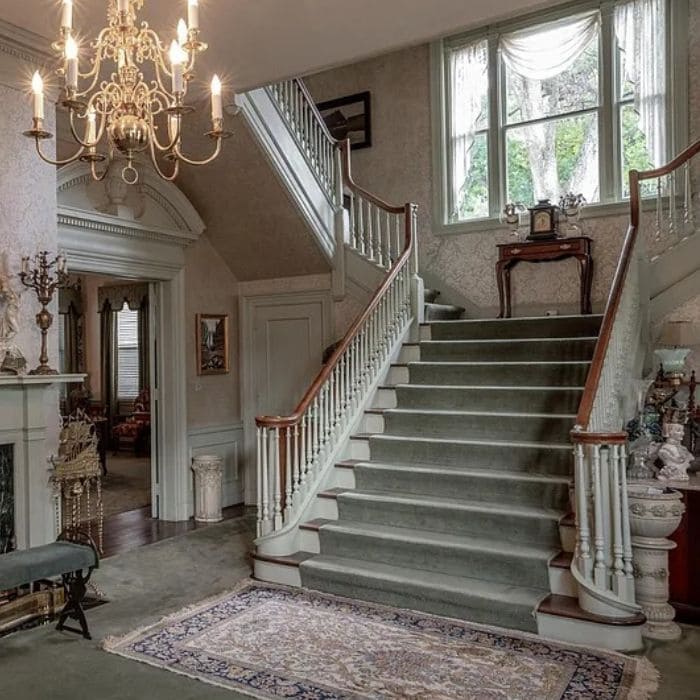
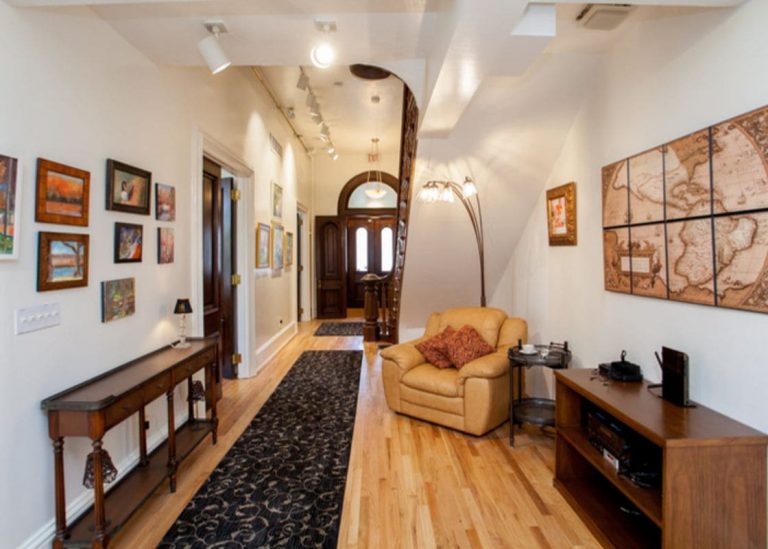
Inside, the entry hall opened wide and grounded the house immediately.
Original hardwood floors stretched beneath our feet, worn slightly along the center path where decades of footsteps had passed through, while the edges remained smooth and darkened with age.
The staircase rose straight ahead, solid and unshowy, covered with a green wool runner chosen years ago because it resisted wear and felt quiet underfoot.
Above us hung a brass chandelier dating back to the 1930s, salvaged from a hotel renovation in Montgomery long before salvage became fashionable.
It had been rewired once for safety, but the glass sleeves were original, uneven in shape and soft in color.
Margaret looked up at it and said, “People tell me I could get a lot for that fixture, but I wouldn’t know what to replace it with,” and then added, “It still belongs right there.”
A Front Room Shaped By Winters And Conversations
To the left of the entry hall, the front sitting room centered around a painted wood fireplace mantel that had been part of the house since its earliest days.
The original marble surround had cracked during a harsh winter decades ago and was replaced with locally sourced stone, carefully matched to the original proportions.
Above the mantel hung a framed portrait of Margaret’s grandfather, painted during the Second World War, its surface dulled slightly with age.
On the mantel sat a small brass clock, worn around the edges, its numbers faint from years of handling.
“It hasn’t kept the right time in a long while,” Margaret said, smiling, “but Thomas used to wind it every Sunday morning anyway.”
She paused for a moment and added, “He said if it stopped completely, the room would notice.”
The Green Living Room And The Art of Keeping Things
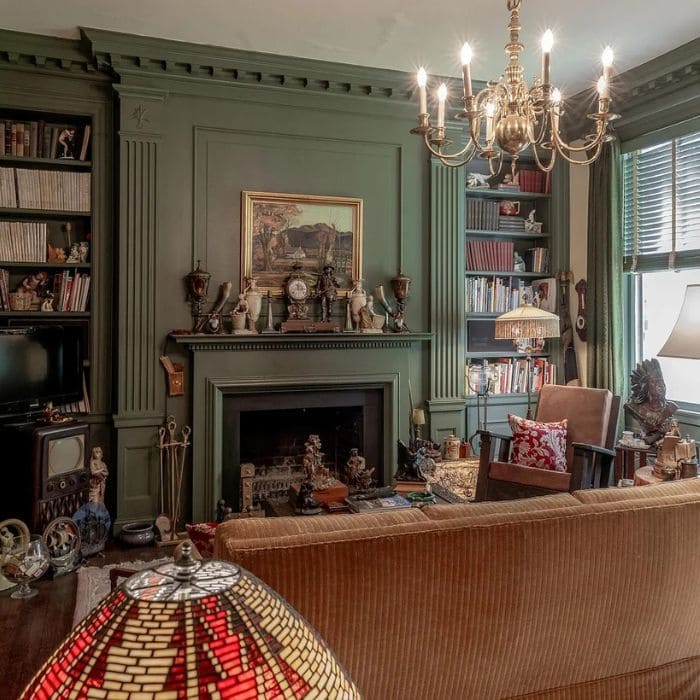
Moving deeper into the house, the main living room revealed itself slowly.
Built-in shelves painted a deep green framed the fireplace wall, installed in the late 1930s after the original owners grew tired of freestanding cabinets shifting with the seasons.
The shelves held first-edition novels, travel books with cracked spines, and small sculptures collected during trips that had clearly been more about memory than souvenirs.
A leather armchair sat near the fireplace, its surface worn smooth where a hand would naturally rest.
Margaret noticed my attention and said, “That chair belonged to Thomas’s father. We’ve had it repaired twice, but we never changed it.”
The cushion dipped slightly, shaped by decades of the same posture, and the chair felt anchored to the room in a way no new piece ever could. Its value on paper was modest, but its place in the house was permanent.
The Quieter Rhythm At The Back of The House
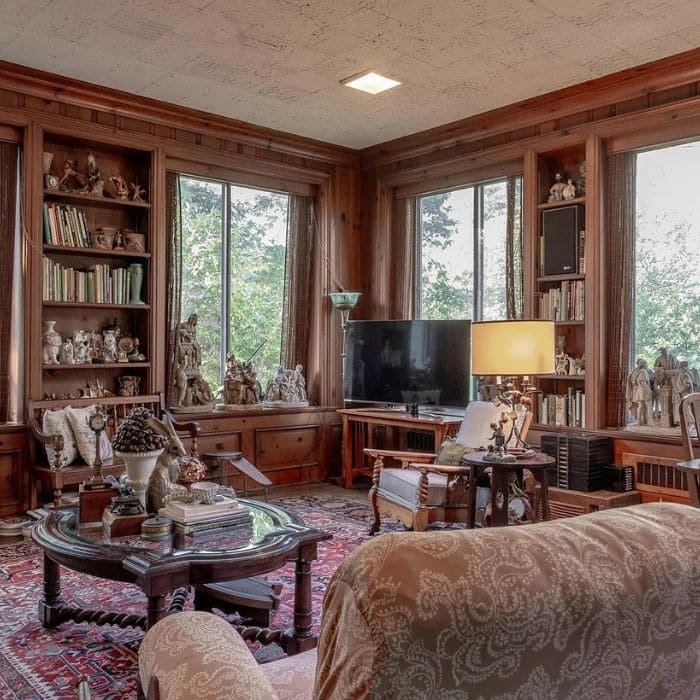
Toward the rear of the house, the tone shifted from formal to familiar. The back sitting room opened toward the garden, with large windows that pulled in filtered light through layers of leaves.
These windows had been replaced years earlier after storm damage, but Margaret explained that Thomas insisted on keeping the original dimensions.
“He said if the light changed, the room wouldn’t feel honest anymore,” she told us.
A small wooden table sat near the window, its surface marked by faint rings left behind by coffee cups over the years. Margaret smiled when I mentioned them.
“That was his spot,” she said. “Every evening, he sat right there and watched the garden settle down.”
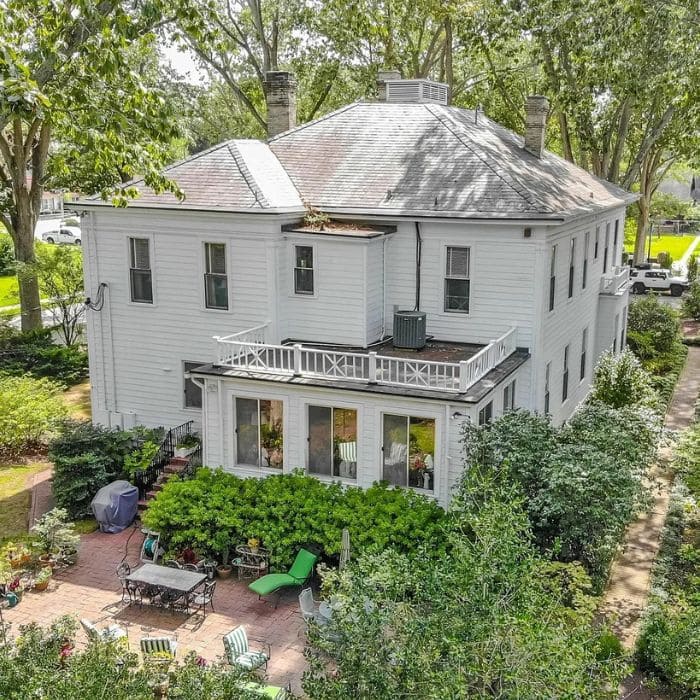
The brick patio outside looked well-used, not staged, with potted plants arranged where they happened to thrive rather than where symmetry demanded.
Upstairs, where the house lowers its voice
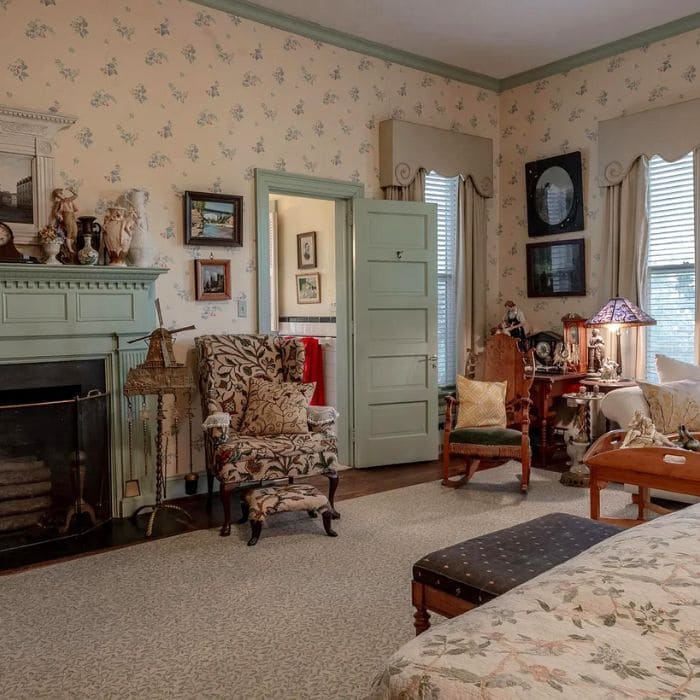
The second floor felt noticeably quieter, as if the house itself understood that this was where rest and privacy lived. Bedrooms were comfortably sized, with tall ceilings and solid doors that closed with reassuring weight.
The primary bedroom faced east, chosen deliberately for the way morning light reached the far wall without glare.
Plus, a small dresser near the window dated back to the 1920s, passed down through Thomas’s family, its drawers still sliding smoothly.
Margaret ran her hand across the top surface and said, “We moved this dresser more times than I can remember, but it always ended up back here.”
A shallow scratch near one corner told a story of hurried packing during a long-ago storm evacuation, and no one had ever tried to hide it.
A Dining Room Designed For Staying Longer
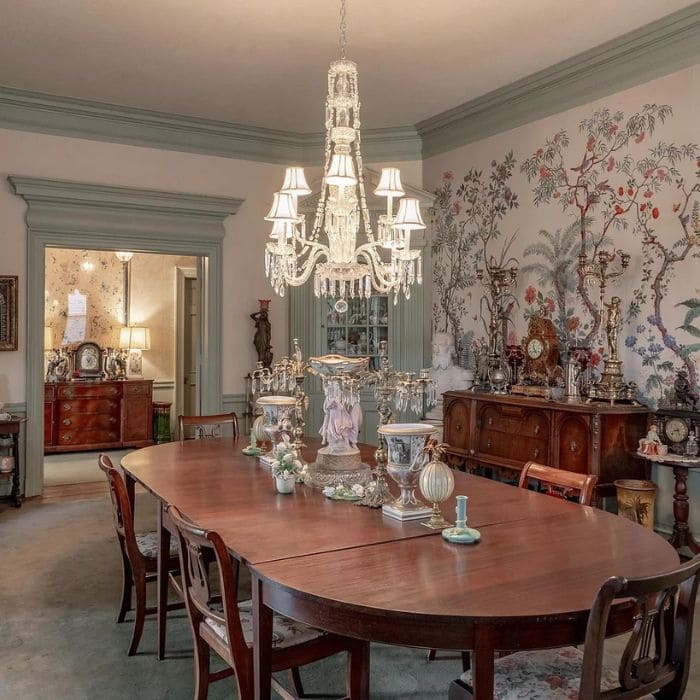
Back downstairs, the dining room remained one of the most intact spaces in the house.
Original trim and crown molding framed the room, and a crystal chandelier installed as an anniversary gift decades ago hung low enough to feel present without dominating the space.
The long wooden table showed a permanent seam down the center, evidence of years spent extending it to make room for one more guest.
The chairs did not match perfectly, and the wear on their arms revealed where hands had rested through countless meals.
Margaret laughed softly as she said, “No one ever planned to stay that long, but no one ever left early either.”
Why this house was the right beginning
When we stepped back onto Maple Grove Avenue later that morning, the house looked exactly as it had when we arrived, yet it felt entirely different because now it had context.
This was not a home defined by trends, renovations, or market value, It was defined by restraint, care, and the quiet confidence that comes from knowing when not to change something.