Knock, Knock, Knock… This Is Not a House Tour
Knock, knock, knock. If you’re expecting a freshly staged living room or a perfectly finished old farmhouse, this is the moment where the story quietly turns in a different direction. This post is not about a completed home, not even about a renovation that is halfway done. It is about a place most people will…
Knock, knock, knock.
If you’re expecting a freshly staged living room or a perfectly finished old farmhouse, this is the moment where the story quietly turns in a different direction.
This post is not about a completed home, not even about a renovation that is halfway done.
It is about a place most people will never step inside, a structure that stands alone in open water, exposed to wind, ice, and time, and a restoration that feels closer to archaeology than remodeling.
This may be the most unusual story I have ever shared on this blog, because instead of showing you “after” photos, I am inviting you into a work that is still very much unfinished, still rough, still peeling, and still deeply honest.
These images were shared by a close friend of mine on Facebook last week, and with his permission, I am sharing them here so we can focus entirely on the place itself, not the person behind it.
A Lighthouse Bought at Auction
My friend’s words stayed with me immediately:
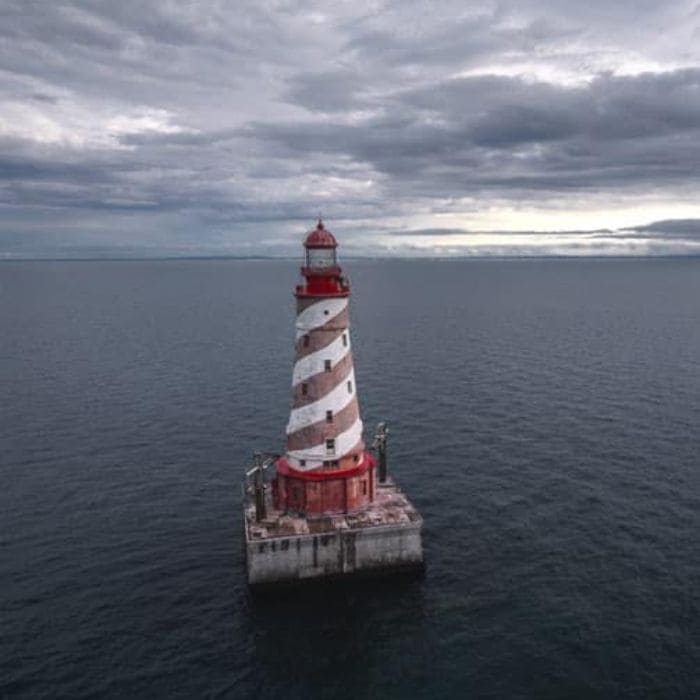
“My old house was purchased at government auction in 2016 and is located 20 miles west of the Mackinac Bridge in Lake Michigan. It was built in 1908 during the golden age of offshore lighthouses. The structure was extremely ornate for being located so far offshore. I am working to restore it and make it available for the public to enjoy.”
Calling this an old house almost feels like an understatement.
This is the White Shoal Light Station, an offshore lighthouse built directly into Lake Michigan, standing on a massive concrete crib foundation, surrounded by open water in every direction.
There is no yard, no neighboring structure, no street. Just wind, waves, and history.
The lighthouse sits roughly 20 miles west of the Mackinac Bridge, in deep water that freezes solid in winter and churns violently during storms.
Every single material that went into this structure had to be transported by boat more than a century ago, assembled in harsh conditions, and designed to last through ice pressure and relentless moisture.
Built in 1908: The Golden Age of Offshore Lighthouses
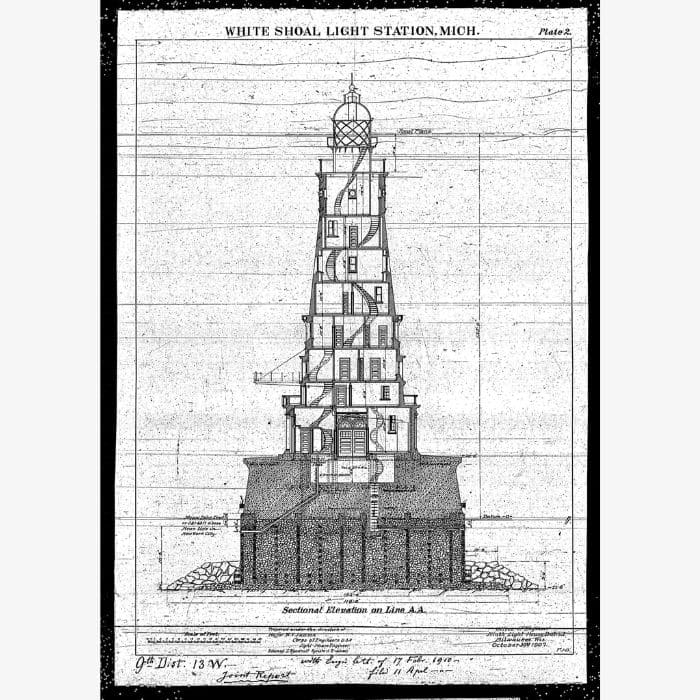
Construction began in 1907 and was completed in 1908, during what historians often call the golden age of offshore lighthouse engineering.
This was a time when the U.S. Lighthouse Service invested heavily in durable, self-contained structures that could operate year-round with resident keepers.
White Shoal was designed not just as a navigational aid, but as a fully functional vertical home.
The structure rises from a submerged concrete crib filled with stone, supporting a multi-story steel and masonry tower.
Inside, every level had a specific purpose: storage, mechanical rooms, living quarters, and finally the lantern room at the top.
Unlike many inland lighthouses, White Shoal was unusually ornate.
Decorative trim, carefully proportioned staircases, and detailed ironwork were incorporated even though very few people would ever see them. This was functional architecture built with pride.
Inside the Tower: Peeling Paint and Layered History
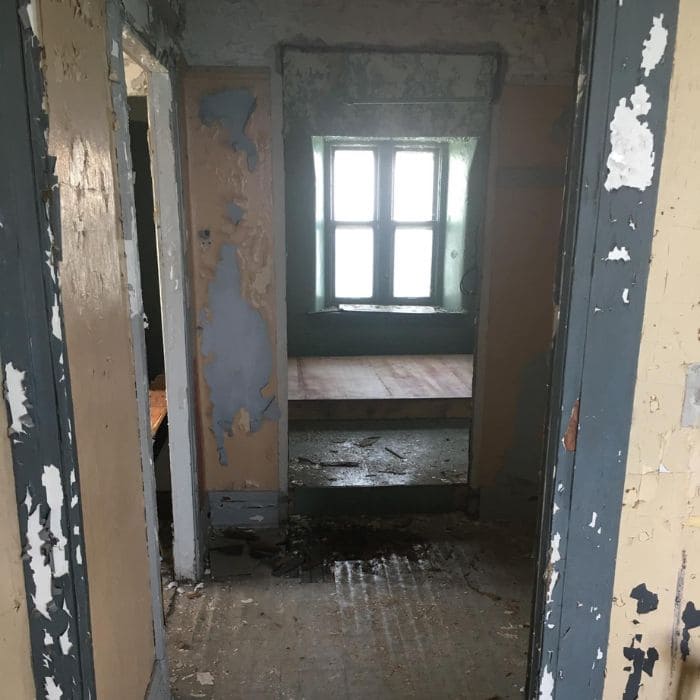
The interior photographs may surprise you if you’re used to seeing “before and after” renovations.
Walls are flaking with layers of paint applied over decades. Door frames show thick buildup where generations of maintenance crews repainted rather than stripped.
Floors are worn, uneven, and sometimes partially removed, exposing original subflooring.
In several rooms, you can see the unmistakable signs of abandonment.
Chipped plaster lies scattered across the floor. Old mechanical elements sit idle. Staircases curve upward tightly, designed to conserve space while allowing keepers to move efficiently between levels.
What makes this restoration unique is that nothing can be rushed.
Removing paint is not just cosmetic work here. Each layer may contain lead, requiring careful testing and containment.
Original finishes must be documented before removal. Even debris disposal becomes a logistical challenge when every bag must be transported by boat.
Structural Reality: Steel, Concrete, and Water
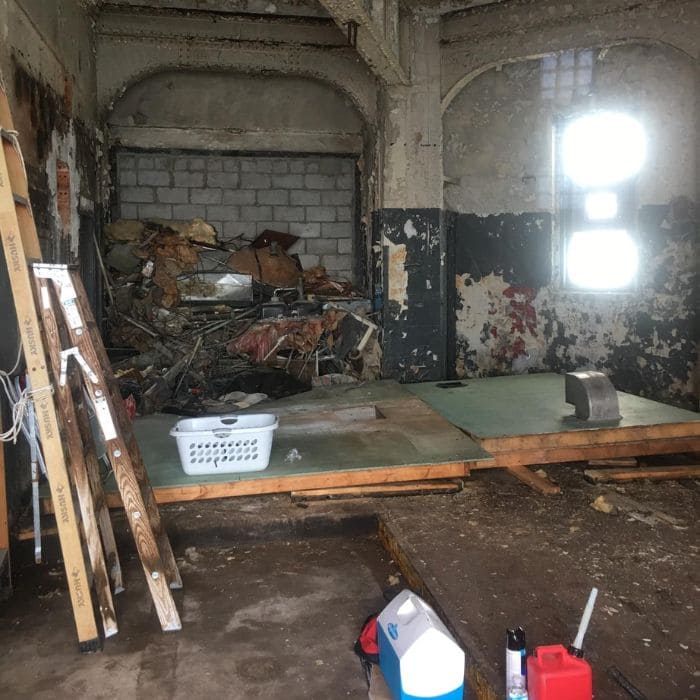
One of the most striking images shows exposed steel beams, riveted joints, and heavy structural framing.
This is not typical residential construction. Offshore lighthouses were engineered more like ships than houses, designed to flex slightly under wave action while remaining rigid enough to support the tower above.
The concrete crib foundation beneath White Shoal is massive, filled with stone and sunk precisely into the lakebed.
Above it rises a steel framework encased in masonry and interior walls. Over time, moisture infiltration, freeze-thaw cycles, and salt exposure have taken their toll.
Restoration here means addressing corrosion on steel members, repairing concrete spalling, and ensuring that structural integrity remains uncompromised.
This is not work that can be improvised. Every repair must be carefully planned, often with marine engineers and preservation specialists involved.
Rooms That Once Had a Purpose
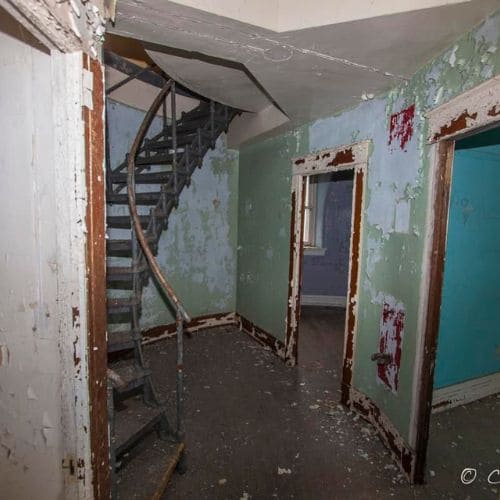
As you move upward inside the lighthouse, the spaces shift in character.
Lower levels were largely utilitarian, used for storage, fuel, and equipment. Higher levels housed the keepers, with modest sleeping quarters, small workspaces, and minimal comforts.
You can see a narrow corridor with doors leading to small rooms, paint peeling heavily from the walls.
You can also see a stairwell where the curve of the steps tells you how many feet climbed those stairs daily, carrying supplies, trimming lamps, and maintaining the light through storms and long winters.
At the top, the lantern room opens to a view that is almost unsettling in its openness.
The railing surrounds nothing but water stretching to the horizon. Standing there today, you are reminded why this light mattered so much to passing ships.
Restoration Without Illusions
What I respect most about this project is that my friend has never tried to present it as glamorous.
This is not a quick flip. There is no unrealistic timeline. Every step forward is earned slowly, often after months of planning.
Materials must be historically appropriate. Modern substitutions are limited.
Even something as simple as choosing paint colors involves researching original specifications and understanding how light behaved inside the tower in different eras.
Logistics remain one of the greatest challenges.
Access depends on weather. Tools, materials, and people must all arrive by boat. Winter work is limited. Emergency repairs can become urgent very quickly if water intrusion worsens.
Why This Story Matters
I think many readers will be surprised by this post precisely because it does not offer immediate satisfaction.
There is no final reveal. No styled photoshoot. Instead, there is honesty, patience, and respect for a structure that has already survived more than a century.
This lighthouse is not just being restored as a private project.
The goal is to eventually make it accessible to the public, allowing people to experience a piece of maritime history that would otherwise remain forgotten and unreachable.
In a world obsessed with fast transformations, this story reminds us that some places demand time, humility, and deep care.
Not every restoration is about adding value in a financial sense. Some are about preserving memory, craftsmanship, and the quiet dignity of buildings that once kept others safe.