Becoming the Next Steward of an 1822 Farmhouse in Doylestown
I have a childhood friend, James. He has a small family, the kind that measures time in school drop-offs, weekend breakfasts, and the soft routines that make ordinary days feel anchored, and this house in Doylestown, Pennsylvania. Built in 1822, the farmhouse sits with a calm confidence that only two centuries of standing still can…
I have a childhood friend, James. He has a small family, the kind that measures time in school drop-offs, weekend breakfasts, and the soft routines that make ordinary days feel anchored, and this house in Doylestown, Pennsylvania.
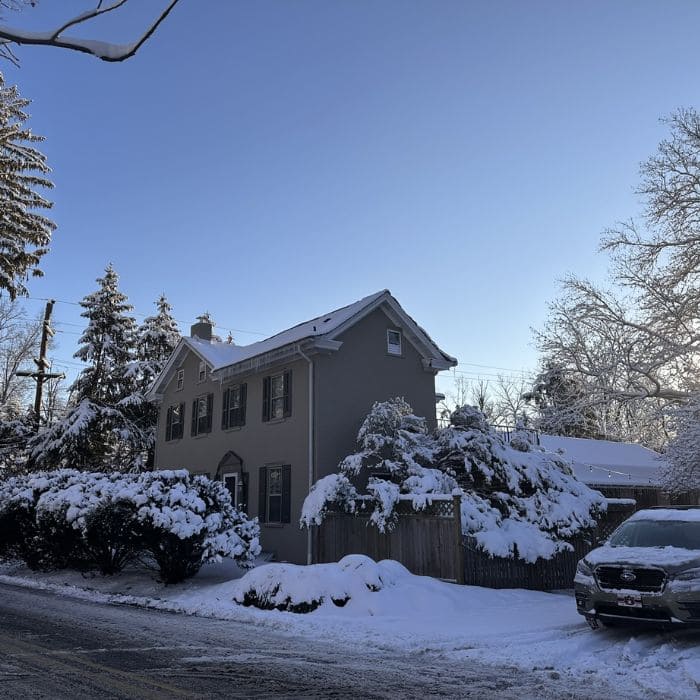
Built in 1822, the farmhouse sits with a calm confidence that only two centuries of standing still can give, its proportions simple and honest, its walls carrying the weight of generations who lived, worked, argued, celebrated, and eventually moved on.
Nearby stands the barn, added in the 1880s, painted a deep, weathered red that looks especially striking against fresh snow, the kind of red that feels earned rather than decorative.
Together, the house and barn feel like old companions who have learned how to age gracefully side by side.
A Winter First Impression That Stays With You
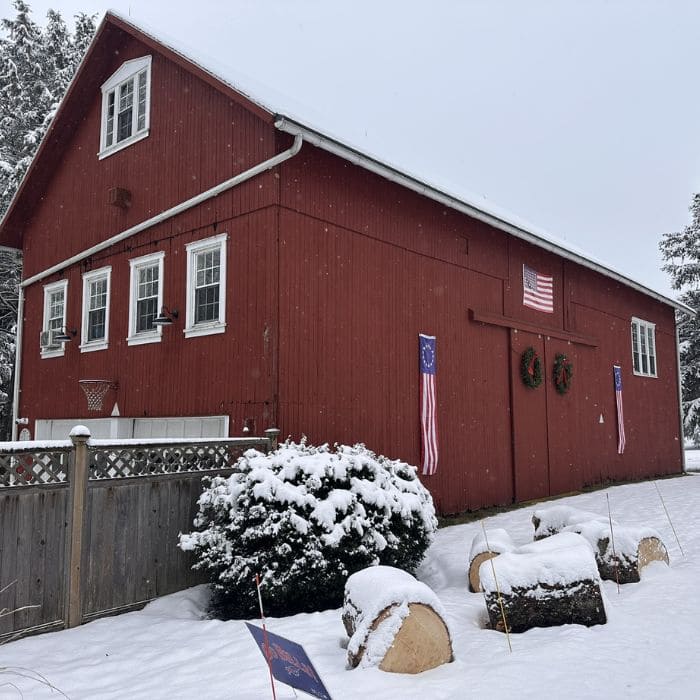
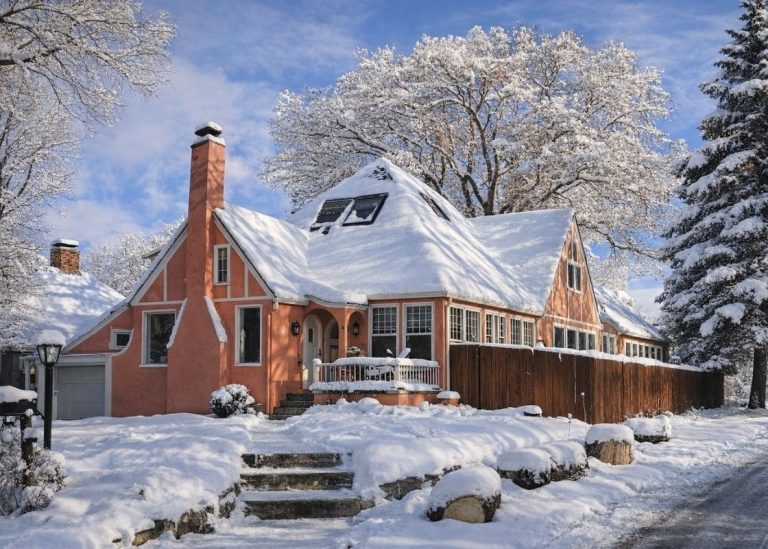
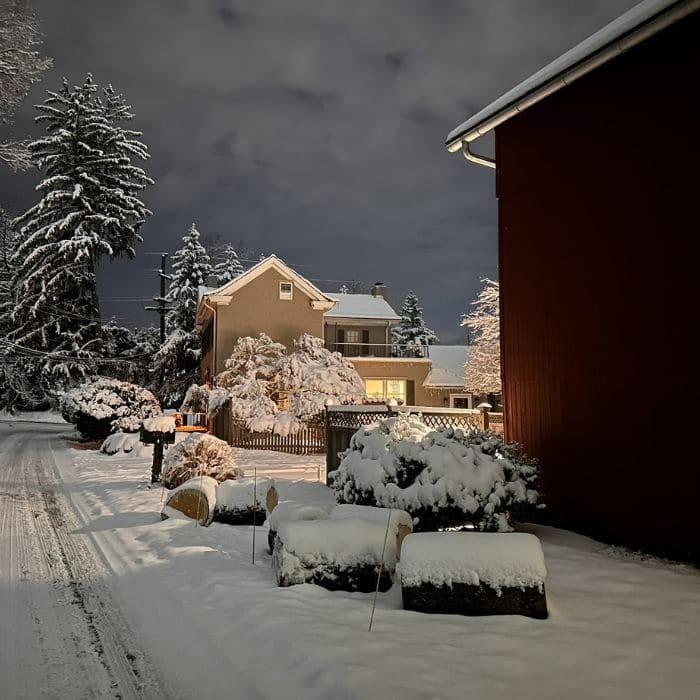
The first photos James sent me were taken after a snowfall, when everything feels quieter and more intentional.
Snow rested thick along the rooflines, softening the edges of the house and barn, while the road beside them curved away gently, its tire tracks already filling back in.
At night, the farmhouse windows glowed with warm yellow light, the kind that makes you imagine dinner being cleared and a kettle being set back on the stove, while outside the trees stood heavy with snow, their branches bent but unbroken.
The barn, dressed simply with wreaths and flags, felt festive without trying too hard, as if it had learned over the years how to mark seasons rather than decorate for them.
The logs stacked neatly nearby were capped with snow, waiting patiently for their turn to be carried inside, a reminder that this is a house that still understands winter in a practical way, not just an aesthetic one.
The House Itself and the Way It Was Built to Last
Farmhouses from the early 1800s were not built to impress strangers, they were built to serve families, and this one shows it in every line.
The walls are thick, the windows tall but restrained, placed to bring in light while keeping out the worst of the cold.
Also, the roof pitch is steep enough to shed snow, and the structure feels grounded, as though it has settled into the land rather than sitting on top of it.
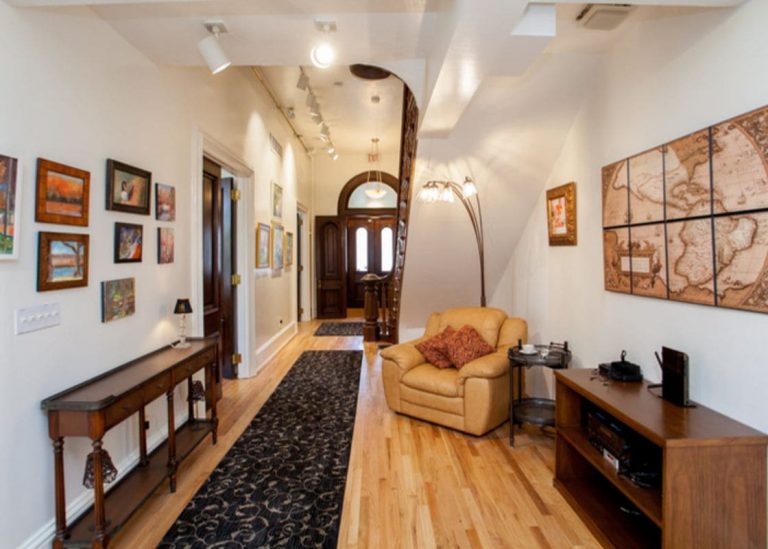
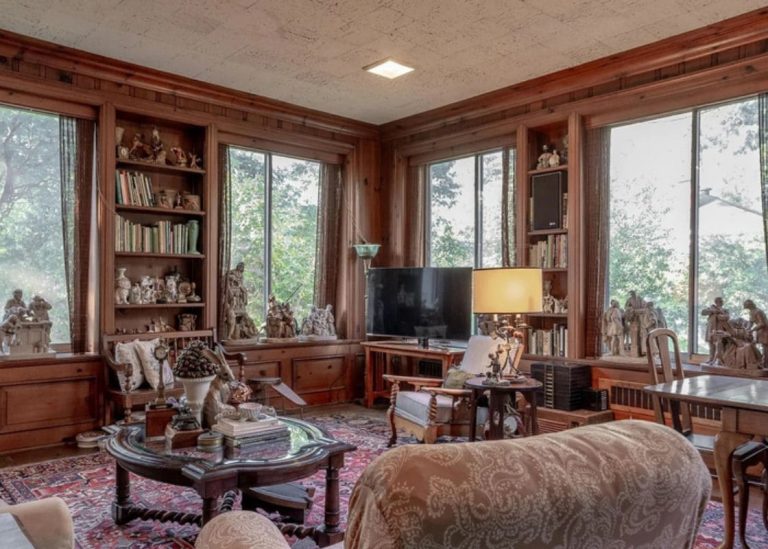
Inside, the layout reflects a time when rooms had clear purposes and circulation mattered, with spaces that connect logically and encourage movement rather than isolation.
Floors creak in places where generations have walked the same paths, not as flaws, but as quiet markers of use.
James told me he noticed how sound carries differently here, softened by age, absorbed by plaster and wood that have learned how to hold life without echoing it back too sharply.
The Barn and Its Place in Daily Life
The barn, built in the 1880s, carries a different kind of presence, slightly more utilitarian, slightly more rugged, and just as full of memory.
Its wide doors open to a space that once held animals, tools, and harvests, and now holds possibilities James is still learning how to name.
In winter, it stands firm against snow and wind, its vertical boards catching light and shadow in a way that makes it feel almost architectural rather than agricultural.
James talks about the barn the way people talk about future projects, but with patience instead of urgency.
He knows it will evolve slowly, shaped by what his family needs rather than by trends, and that feels right for a structure that has already lived several lives before this one.
Learning What It Means to Be a Steward, Not an Owner
What struck me most in James’s words was his use of the word steward, because it reframes everything.
This house does not belong to him in the way new construction belongs to its first owner, clean and untouched. Instead, it has been borrowed from history, with the expectation that it will be returned someday in better shape, richer in story, and still standing.
That mindset shows up in the decisions he makes, from how repairs are approached to how changes are weighed carefully against what the house can accept without losing itself.
Modern conveniences are added quietly, respectfully, often hidden where possible, allowing the house to remain legible as an early 19th-century farmhouse rather than a stage set pretending to be one.
Daily Life Inside an Old House
Living in a house like this means learning its rhythms, especially with a small family. Mornings begin differently when floors are cold in winter and sunlight arrives gradually through tall windows.
Evenings feel more deliberate, shaped by the need to close off rooms, tend fires, and move through the house with awareness rather than haste.
James told me that his children have started to understand the house in ways he didn’t expect, learning which stairs creak, which windows catch the morning sun, and where snow drifts the highest outside.
These small observations are becoming part of their childhood, woven into memory the way newer houses often cannot manage.
Doylestown offers a balance that suits a house like this, close enough to town to feel connected, yet rural enough to preserve quiet and space.
The surrounding trees, fences, and neighboring homes all seem to acknowledge the farmhouse as an elder presence, something to orient around rather than compete with.
In winter, the landscape becomes especially spare, revealing the bones of the place, the way the house relates to the road, the barn to the yard, and the family to both.
It is a setting that encourages reflection without demanding it, offering beauty simply by existing as it has for generations.
Adding the Next Chapter, Slowly and Intentionally
When James says he hopes to spend the next fifty years of his life here, it doesn’t sound ambitious, it sounds grounded.
He talks about small changes rather than grand plans, planting trees that will take decades to mature, maintaining the barn one board at a time, and letting his family grow into the house rather than reshaping it around them too quickly.
A House That Remembers, Even When We Forget
What I find most moving about this farmhouse is the sense that it remembers things we no longer can, holding onto traces of lives lived long before ours.
Every winter snowfall adds another quiet layer to that memory, resting briefly on roofs and fields before melting away, leaving the structure unchanged but subtly renewed.
James and his family are now part of that memory, their presence woven into the ongoing story of the house and barn, adding warmth, sound, and purpose to spaces that have waited patiently for them.
In fifty years, someone else may stand where James stands now, feeling the same humility, the same gratitude, and the same quiet promise to care for what has been entrusted to them, just as he does today.