A Slow Walk Through a House in Lambertville NJ
Knock, knock, knock. Welcome back, and welcome inside again, because this is one of those houses that never feels finished telling its story in a single visit. Every time I step through the front door, it feels as though the house pauses for half a second, sizes me up, and then quietly decides how much…
Knock, knock, knock.
Welcome back, and welcome inside again, because this is one of those houses that never feels finished telling its story in a single visit.
Every time I step through the front door, it feels as though the house pauses for half a second, sizes me up, and then quietly decides how much it’s willing to show me that day.
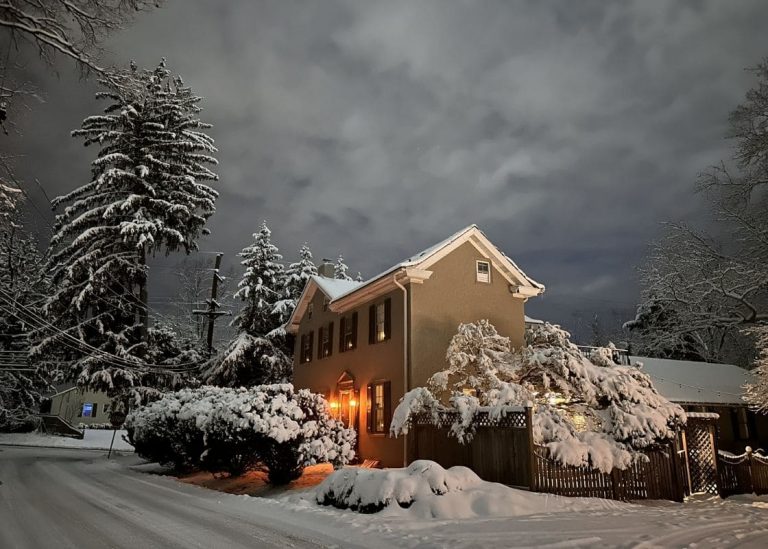
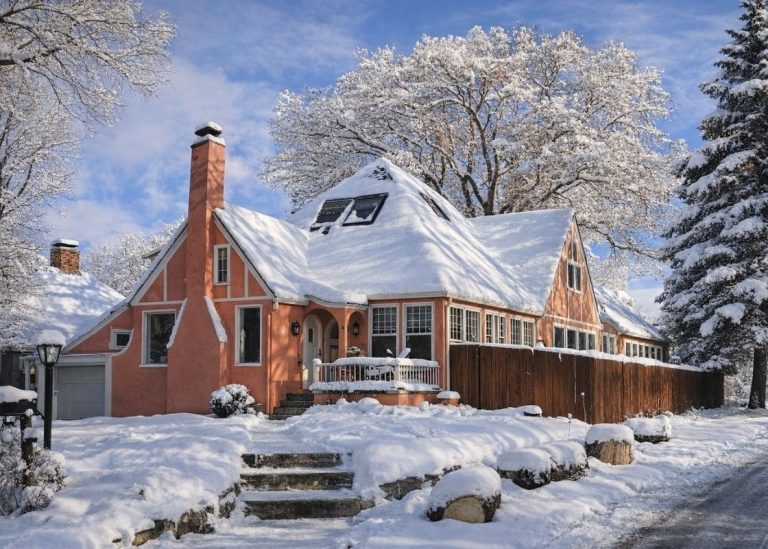
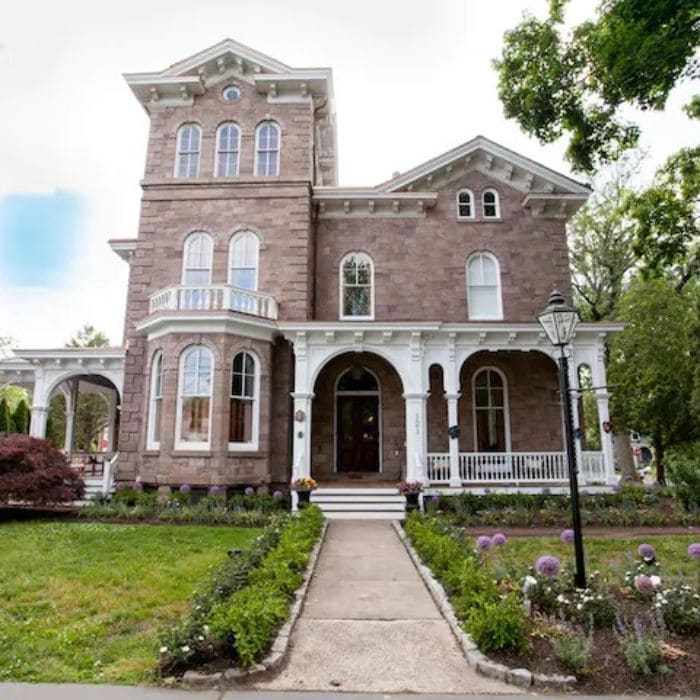
This home sits on a calm residential stretch in Lambertville, New Jersey, just a few minutes from the Delaware River and close enough to hear the town wake up in the morning without being pulled into its noise.
It was built in 1867, and while that number gets tossed around easily, the house itself carries it with a kind of confidence that doesn’t need reminding. It knows how old it is, and it doesn’t apologize for it.
This home was built by William Cowin, the founder of Lambertville Ironworks, and he did not approach the project casually.
The stone used for the exterior was imported from Italy, and the masons who worked it were brought over as well, which still amazes me when I think about the logistics alone.
The house took four full years to build, and once you step inside, that timeline suddenly makes sense.
Also, the stone walls are thick, unapologetically solid, and they hold temperature and sound in a way modern construction simply does not.
Even on a warm afternoon, the interior feels calm and grounded, as if the house is quietly doing its job without asking for recognition.
The Front Porch Where Time Slows Without Asking
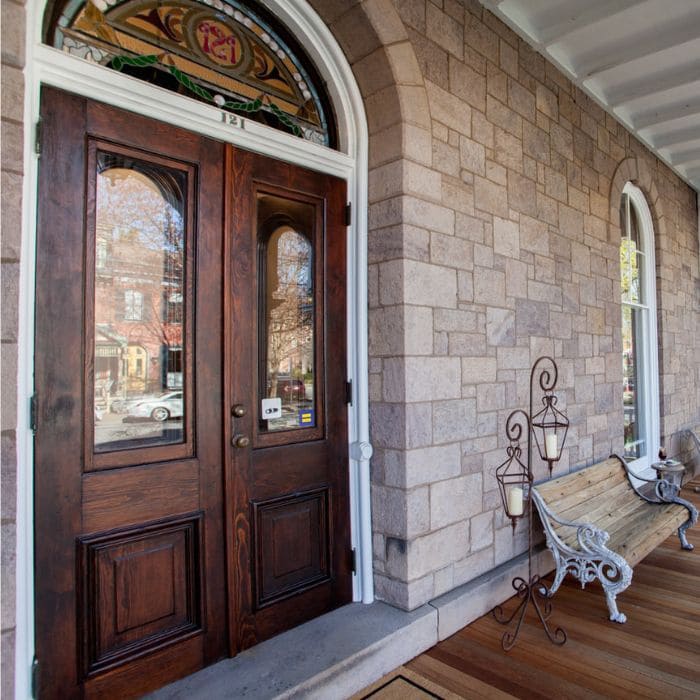
Before even stepping inside, the front porch sets the tone. The boards creak just enough to let you know they’re aware of your presence, but not so much that it feels fragile.
A pair of old wooden benches sit angled toward the street, worn smooth in the places where hands naturally rest.
This is the kind of porch where neighbors stop mid-walk, where packages get placed gently instead of dropped, and where you find yourself sitting longer than planned simply because the house encourages it.
From here, you can see the street curve slightly, framed by trees that have likely watched several generations come and go.
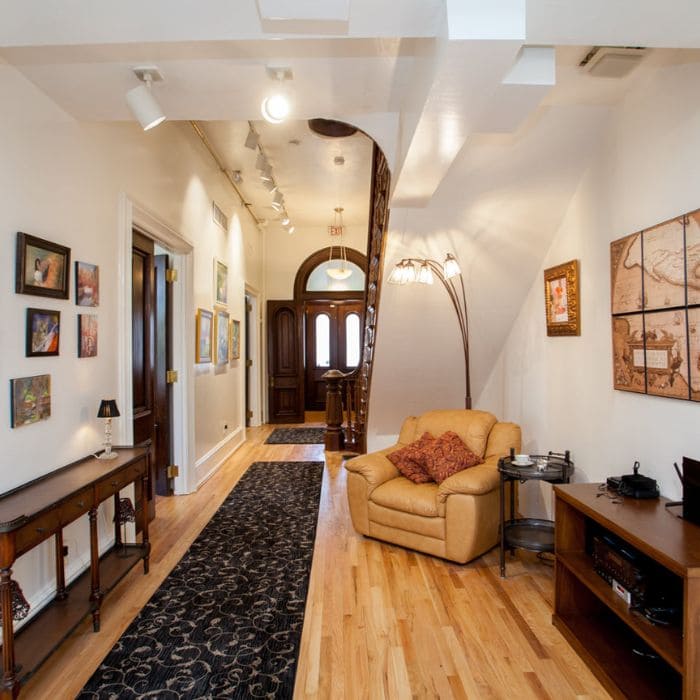
When you open the front door, the entry hall doesn’t rush you forward. The ceiling height, the proportions, the way light falls across the floor, all suggest that arriving should be done thoughtfully.
This isn’t a space designed for dumping keys and moving on. It’s a space that asks you to notice where you are.
The plaster walls have been restored rather than replaced, and if you look closely, you can see subtle undulations that tell you they were shaped by hand.
The floors are original, worn most deeply near the doorway where countless feet paused, hesitated, or turned back for something forgotten.
The Living Room That Knows How to Hold Conversation
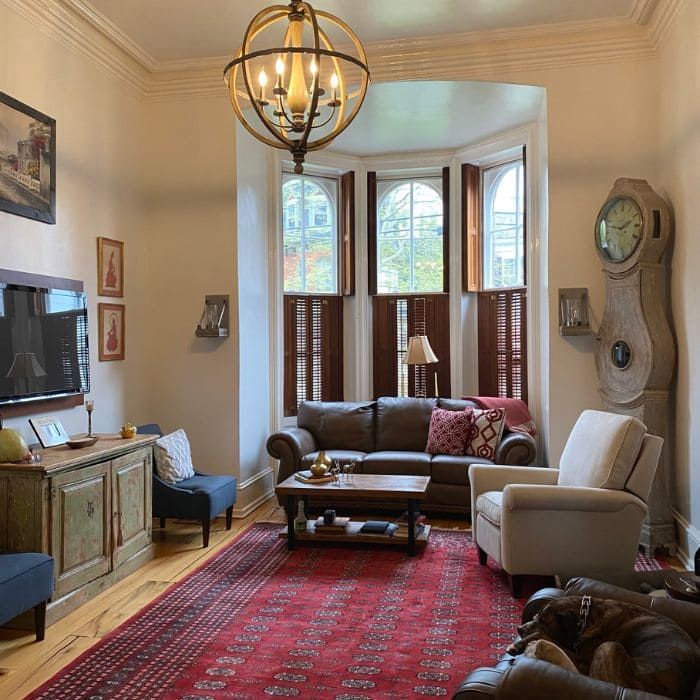
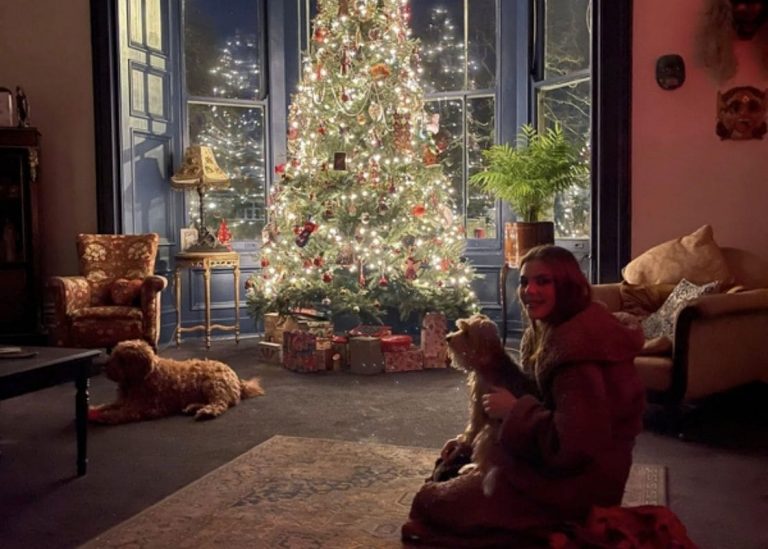
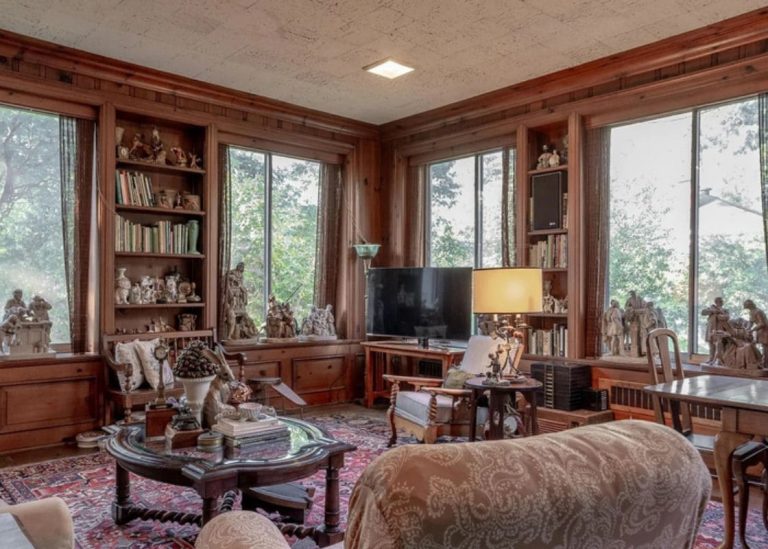
The living room opens to the left, and it immediately feels balanced, as though the room understands its role in the house. Tall windows line the wall, each framed by original wooden shutters that still move smoothly, even after more than a century of use.
The rug anchoring the room came from a small village outside Fez, Morocco, discovered during a trip that was never meant to include furniture shopping.
It traveled thousands of miles and somehow landed here without feeling out of place. Its deep reds and soft blues echo the warmth of the wood tones around it, grounding the space in a way that feels intentional rather than styled.
Furniture is arranged for people, not devices. Chairs face one another, creating natural pockets of conversation, and the room seems to encourage stories that take their time unfolding.
Fireplaces That Carry Memory, Not Just Heat
One of the most commanding features in the living room is the fireplace, surrounded by original Mercer tiles, each one slightly imperfect in the way that makes them irreplaceable.
The colors shift subtly throughout the day, catching morning light differently than evening shadows.
Standing near it, you don’t just feel warmth when it’s lit. You feel continuity. These tiles were chosen to last, not to impress, and that choice shows in how quietly confident they remain.
Moving past the living room, the central hallway draws you inward, guiding you toward the heart of the house. The walls narrow slightly, creating a sense of transition, and footsteps soften as the floor absorbs sound differently here.
This hallway has seen countless comings and goings, and you can feel it in the way the space gently funnels movement without forcing it.
The Staircase That Refuses to Be Rushed
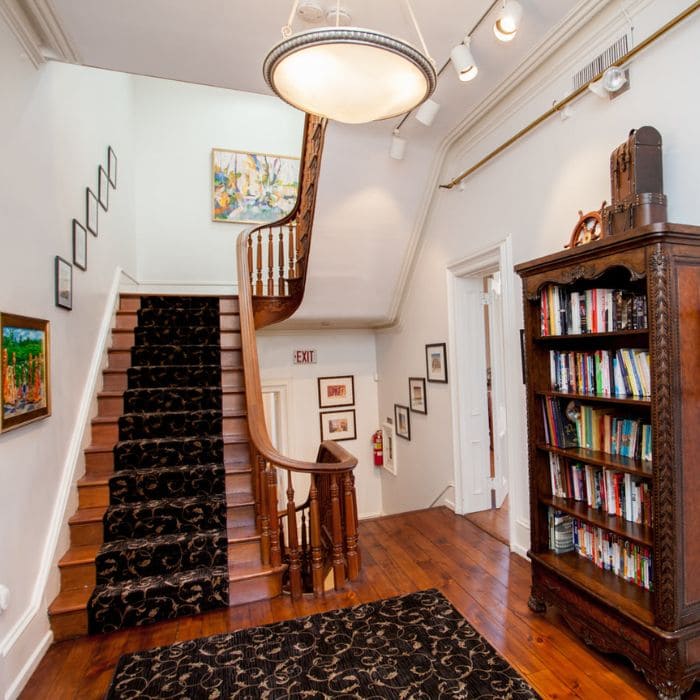
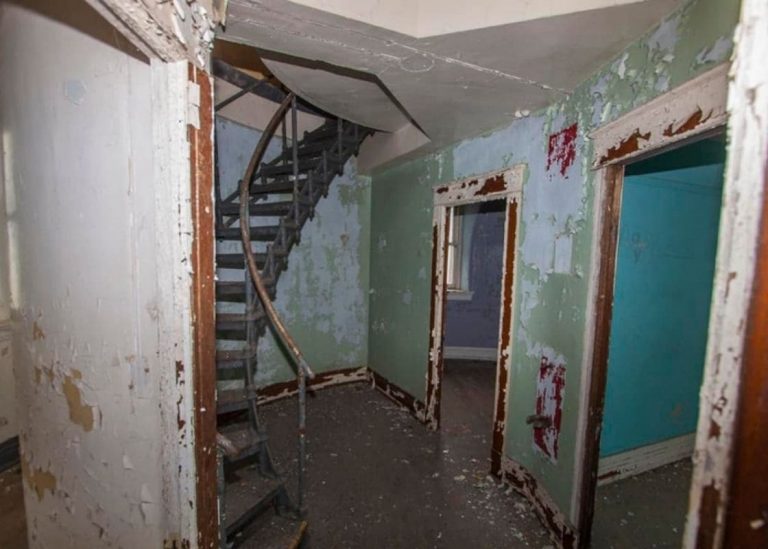
The staircase curves upward with a grace that modern homes rarely attempt. The banister is smooth from years of hands sliding along it, and the steps dip ever so slightly in the center, shaped by habit rather than neglect.
Climbing it feels ceremonial, like the house expects you to acknowledge the journey rather than simply reach the destination.
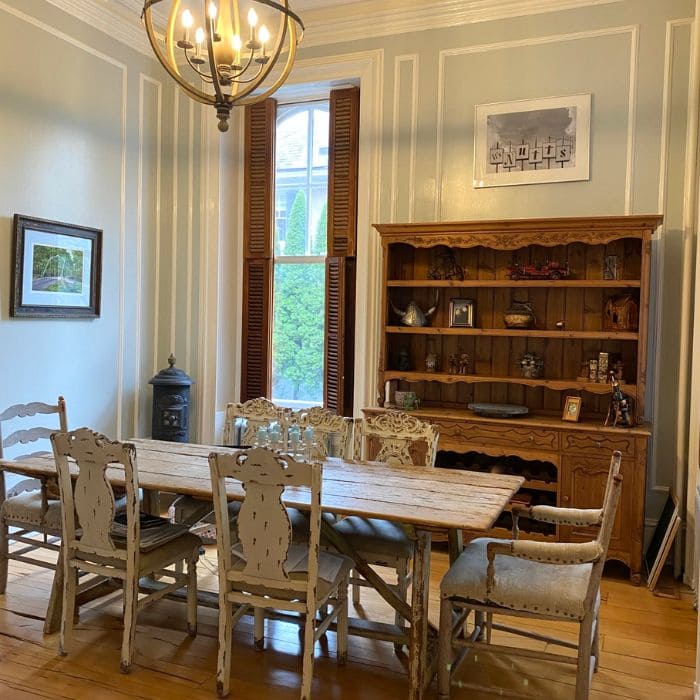
The dining room sits just off the hallway, tall and bright, with paneled walls that frame the space without overpowering it.
A long wooden table dominates the room, its surface marked by small scratches and softened edges that tell stories of shared meals and lingering conversations.
Chairs don’t match perfectly, and that only adds to the charm. Light filters in through tall windows, making the room feel open even when filled with people.
The Kitchen That Respects Daily Life
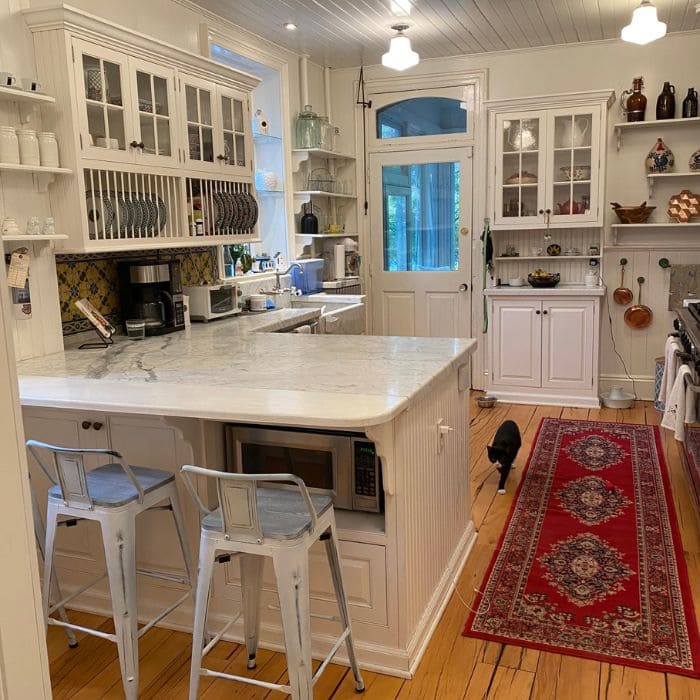
The kitchen manages a rare balance between historical sensitivity and modern use. Cabinets are painted in muted tones that feel appropriate to the house’s age, and marble counters reflect light without demanding attention.
Copper pots hang along one wall, not arranged for effect but because they’re used. The beadboard ceiling is clean and thoughtfully installed, acknowledging the past without attempting to recreate it.
Even standing alone in this room, you feel accompanied by the rhythms of daily life that have passed through it.
A Hidden Room That Changed Everything
One of the most unexpected moments in this house came with the discovery of a small hidden room behind a wall that had always been assumed solid. Finding it felt like the house revealing a secret it had been holding patiently.
The space is modest, but its impact is not. It now serves as a quiet retreat, a reminder that old houses often have more to give if you take the time to look carefully.