A House That Reflects Faith and Memory of a Catholic
Knock, knock, knock… I met William more than ten years ago at St. Mary’s Church, the old Catholic church just off the main road, the one with pale stone walls and a bell tower that rises above the surrounding terraces. Officially, it’s St. Mary of the Assumption, built in the mid-1800s, long before cars or…
Knock, knock, knock…
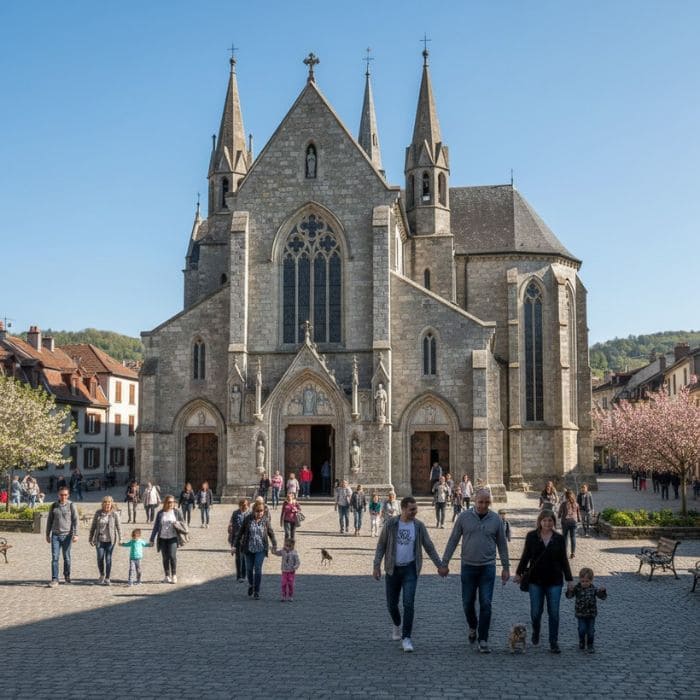
I met William more than ten years ago at St. Mary’s Church, the old Catholic church just off the main road, the one with pale stone walls and a bell tower that rises above the surrounding terraces.
Officially, it’s St. Mary of the Assumption, built in the mid-1800s, long before cars or traffic lights shaped the neighborhood.
The church sits slightly back from the street, with a small iron gate and a short path worn smooth by generations of parishioners.
At the time, I attended Mass every Sunday, not occasionally. Every Sunday.
William was always there early, sitting halfway down the left aisle, his coat folded neatly beside him. His wife sat close, hands resting calmly in her lap.
They never rushed in late, never left early. Their presence was steady, dependable, almost architectural.
We didn’t talk much at first. We nodded. We exchanged small comments about the weather, the hymns, the length of the homily. Friendship came later, quietly.
The Walk From Church to His Home
William’s house is less than a ten-minute walk from St. Mary’s.
You leave the churchyard, turn right at the iron gate, walk past a row of clipped hedges and parked cars, then follow a gentle slope lined with mature plane trees.
After about five minutes, the street narrows slightly, and the houses shift from post-war builds to older Victorian terraces.
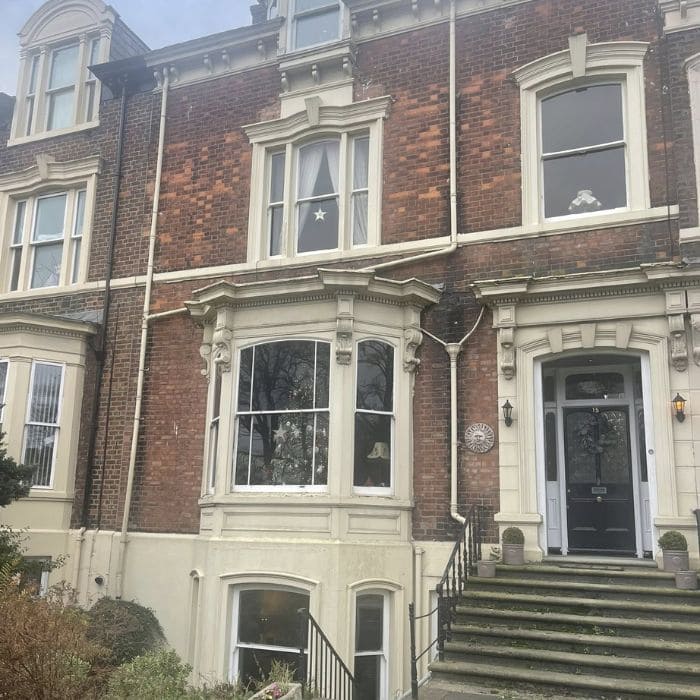
His house was built around 1885, part of a continuous red-brick row with pale stone window frames and tall sash windows.
The brickwork has softened over time, uneven in places, with subtle variations in color that only come from age.
A narrow front garden separates the house from the pavement, just enough space for a few potted plants and stone steps that have been repaired more than once.
Crossing the Threshold
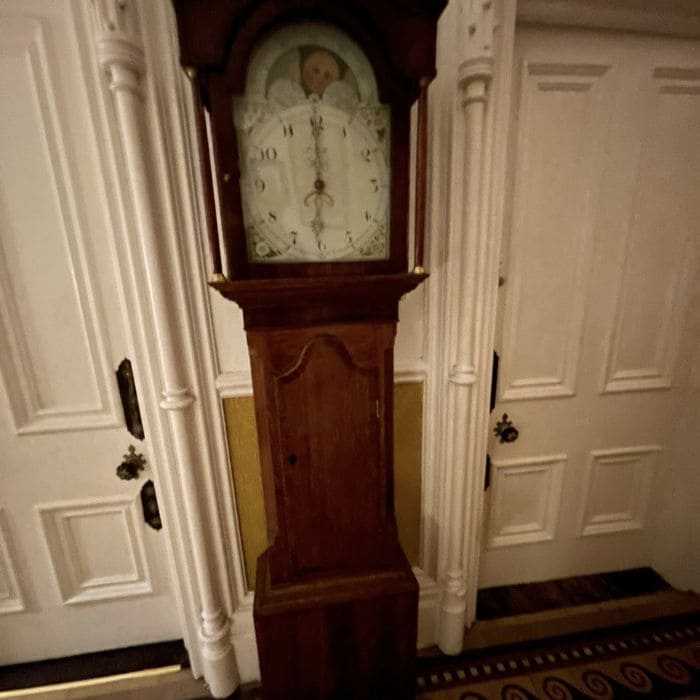
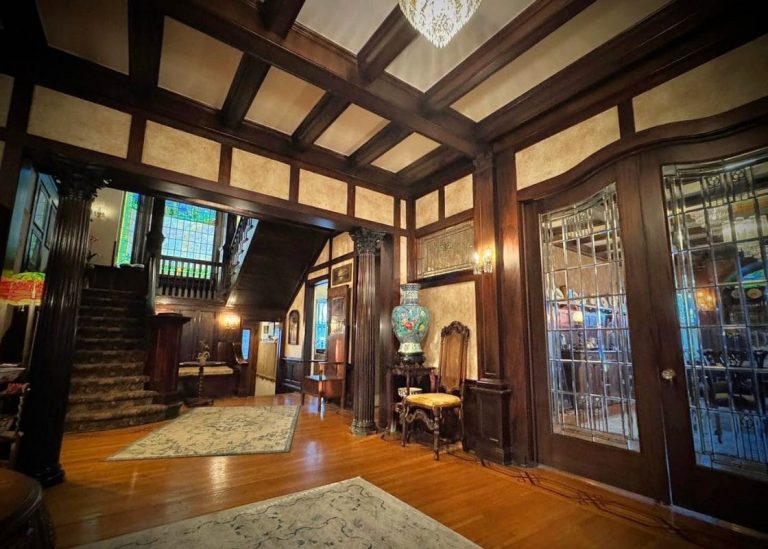
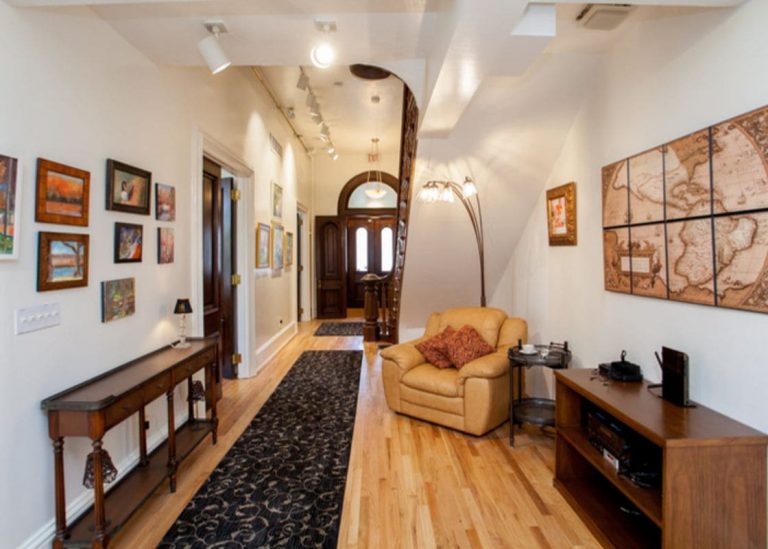
When William opened the door, the hallway greeted me first.
Long, narrow, and cool, with patterned floor tiles that had been carefully repaired tile by tile rather than replaced. The walls held a softness that only comes from layers of paint applied slowly over time.
To the right stood a tall grandfather clock, its wooden case slightly darker near the base where hands have brushed past for years.
William once told me it loses about a minute every week. They wind it every Sunday evening and no exceptions.
Above it hangs a small framed image of the Sacred Heart of Jesus, positioned not for decoration, but visibility. You see it when you leave, and you see it when you return.
A Living Room Shaped by Time
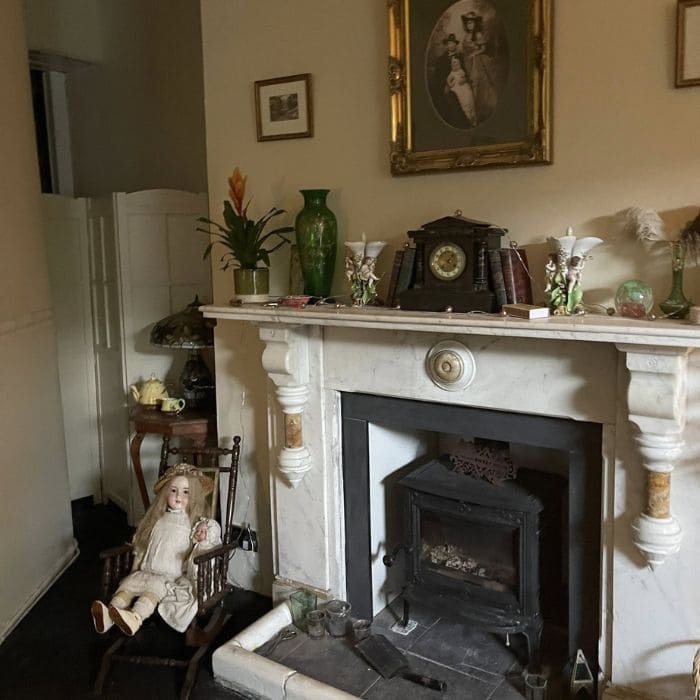
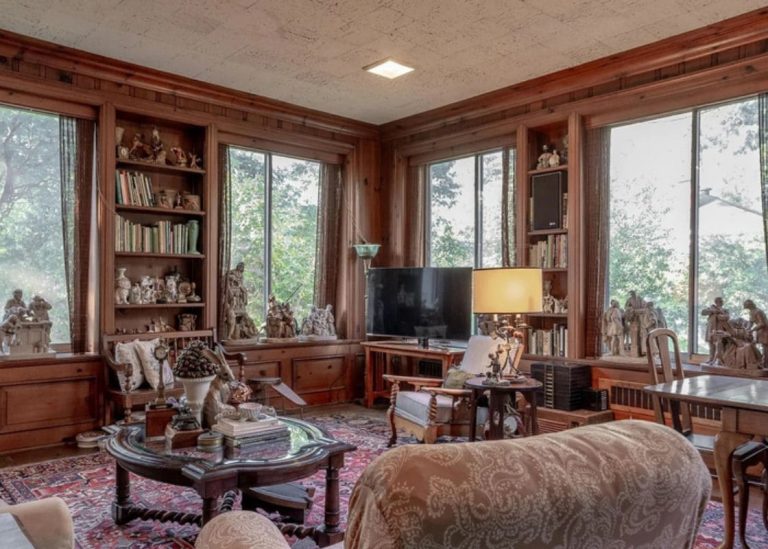
The front living room faces the street, its bay window filtering light through lace curtains that have likely been replaced more times than anyone remembers.
The ceiling rises high, nearly three and a half meters, with original cornices that were repaired carefully rather than stripped away.
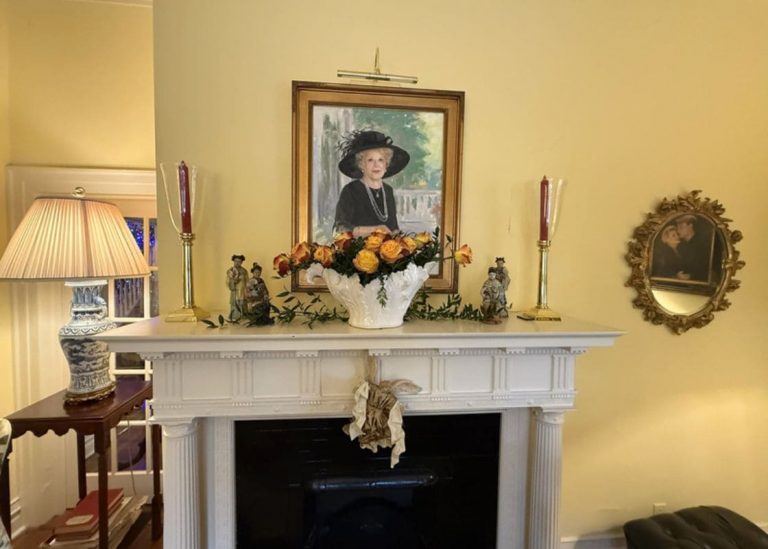
The fireplace anchors the room. Pale marble, softly veined, installed sometime in the early 1900s.
The hearth bears faint wear marks where coal buckets once rested. On the mantel sit a brass crucifix, a porcelain statue of the Virgin Mary, and a framed wedding photograph of William’s parents.
Corners of Quiet Devotion
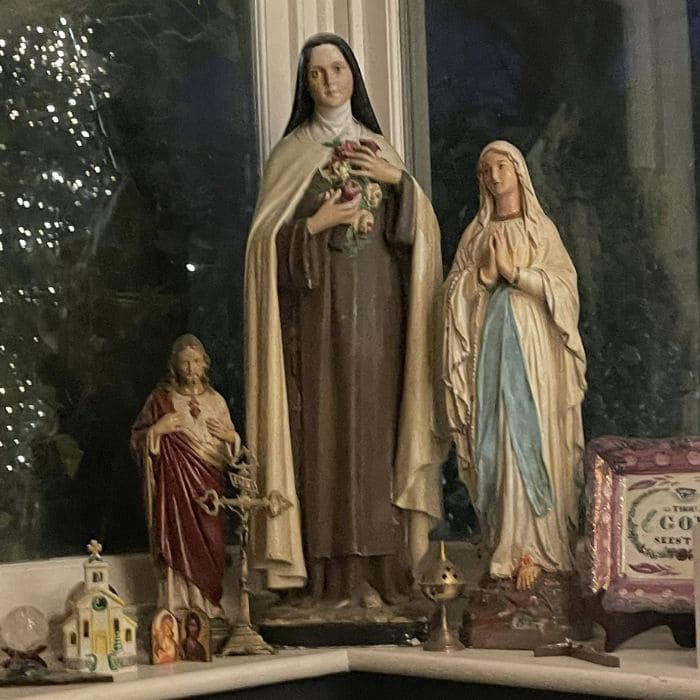
Throughout the house, faith appears in small, deliberate corners.
Near the bay window stands a statue of Saint Thérèse of Lisieux, her base worn smooth from years of dusting. William’s wife told me she lights a candle there on days when words feel insufficient.
In the back hallway, a simple wooden shelf holds a rosary. The beads are dark, wooden, and slightly uneven. They belonged to William’s grandmother.
When the string broke years ago, they re-threaded it themselves, keeping every original bead.
The Dining Room and Daily Ritual
The dining room looks out onto the garden. It is modest, but deeply functional.
A solid wooden table sits at the center, surrounded by mismatched chairs collected over decades. Above it hangs a small chandelier, rewired but original.
William told me they still sit down together every evening, no matter how simple the meal. On Sundays, after Mass at St. Mary’s, this room fills slowly with warmth, conversation, and routine.
Upstairs, the house grows quieter. The staircase creaks at the third step, something William once pointed out with a small smile. Bedrooms are simple, practical, and calm.
In the spare room, which faces east, a small table stands by the window.
On it rests a statue of the Virgin Mary. Morning light spills across her face gently. William told me this placement was intentional. “She belongs where the day begins,” he said.
The Fireplace That Tells a Story
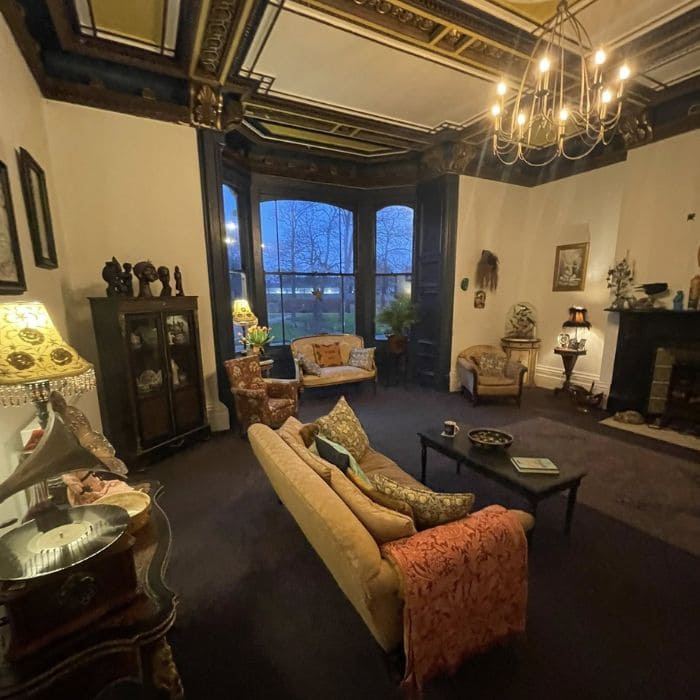
What impressed me most was not any single room, but the care given to repairs.
William once showed me old photos of work they had done on a fireplace years ago. The tiles were removed slowly using a wide chisel and small hammer.
Some cracked. Some came away cleanly. They worked in short sessions, stopping when the mortar resisted too much.
They spent weeks visiting salvage yards to find matching green ceramic tiles, rejecting anything too glossy or too new. When they finally found the right ones, they brought them home carefully, wrapped in newspaper.
They repainted the surround in a warm, soft white. A color that respected the age of the room.
Why This House Stays With Me
Knock, knock, knock.
That sound stays with me because it belongs to a house that does not try to impress. William’s home reflects a life lived with consistency, care, and faith woven into daily habits rather than grand gestures.
Among all the houses I’ve visited, this one lingers. Not because it is perfect, but because it is honest.
It shows what happens when belief is practiced quietly, maintained patiently, and carried forward room by room, year by year.