A House That Grew Up With Us in South America
This house belongs to my relatives in South America, tucked into a quiet residential neighborhood on the outskirts of San Isidro, Buenos Aires Province, Argentina, not far from Avenida Rolón, where the streets soften into older family homes and long-established trees that were planted with optimism. The house sits on Calle Las Acacias, a narrow…
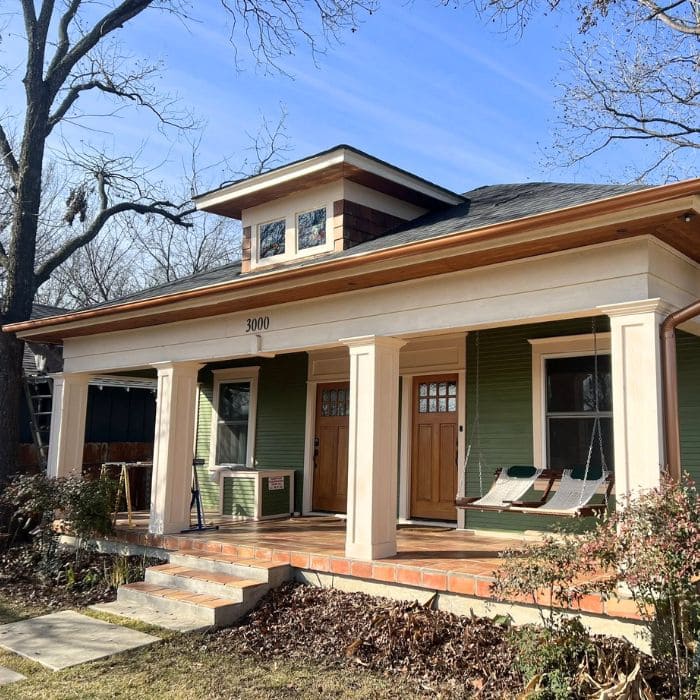
This house belongs to my relatives in South America, tucked into a quiet residential neighborhood on the outskirts of San Isidro, Buenos Aires Province, Argentina, not far from Avenida Rolón, where the streets soften into older family homes and long-established trees that were planted with optimism.
The house sits on Calle Las Acacias, a narrow street that rarely feels rushed, where neighbors still recognize each other’s dogs before they recognize their cars.
The home itself was built in 1974, during a time when concrete block construction, deep eaves, and shaded verandas were considered practical rather than charming.
It is a single-story structure with a low-sloped roof, wide overhangs, and a front porch that wraps just enough to catch the afternoon breeze without inviting too much sun into the living room.
When I was young, visiting this house felt like entering a small universe that followed its own rules, especially because of the four trees that marked its corners like quiet guardians.
The Four Trees That Defined the House
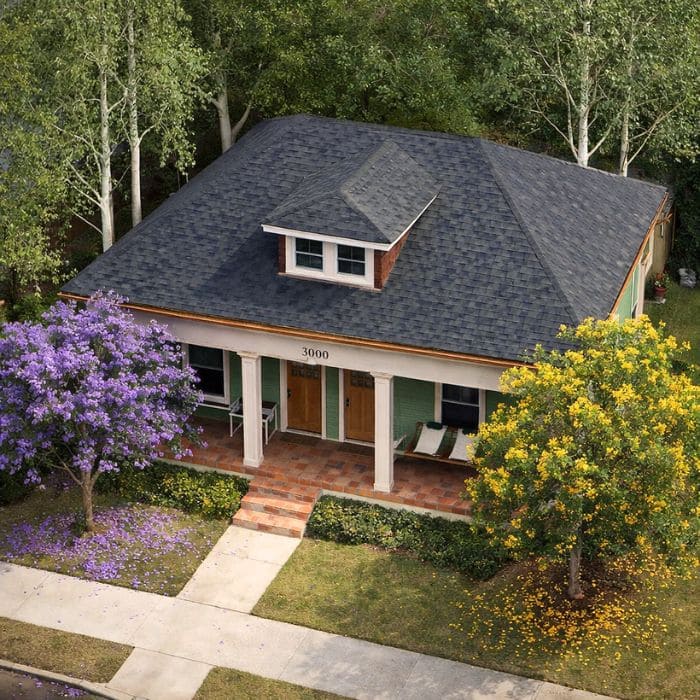
When my relatives first moved in, they planted four trees, one at each corner of the property, a decision made with more hope than foresight.
At the front left corner stood a Jacaranda, chosen for its purple blooms that would scatter petals across the sidewalk every spring.
At the front right corner, they planted a Tipuana tipu, a fast-growing shade tree popular at the time, known locally as tipa, loved for its broad canopy and disliked later for its ambition.
Behind the house, anchoring the back corners, were two Eucalyptus trees, planted because someone once said they grew quickly and smelled nice after rain, which turned out to be very true and very incomplete advice.
As a child, I remember those trees as companions rather than threats.
We tied ropes to the Jacaranda and made swings that creaked ominously but never broke, while the Eucalyptus leaves crackled underfoot like dry paper on hot afternoons.
The Tipuana dropped seed pods that helicopters would spin through the air, and we pretended they were messages from the sky.
Back then, the trees were tall enough to climb but small enough to forgive mistakes, and the house seemed comfortably wrapped in green rather than overshadowed by it.
How Time Changes Scale Without Asking Permission
Over 20 years, those trees grew in ways no one truly predicted, because trees never grow politely.
By the time I was visiting as a teenager, the Eucalyptus had already risen well above the roofline, their pale trunks peeling in ribbons, their roots quietly testing boundaries underground.
The Tipuana spread sideways with confidence, its branches leaning toward the roof as if trying to listen inside the house.
My relatives would joke about it at family lunches, saying things like, “The trees are just checking if we are still home,” but the humor slowly carried an edge of concern, especially after gutters clogged more often and leaves found their way into places leaves should never be.
Still, no one rushed to act, because these trees had become part of the house’s identity, and cutting them felt almost like erasing a chapter rather than solving a problem.
The Night the House Was Woken Up
That balance ended during a late summer storm last year, one of those storms that arrives quietly and then refuses to leave. Heavy rain soaked the ground for hours, and when the wind picked up after midnight, it did not howl so much as shove.
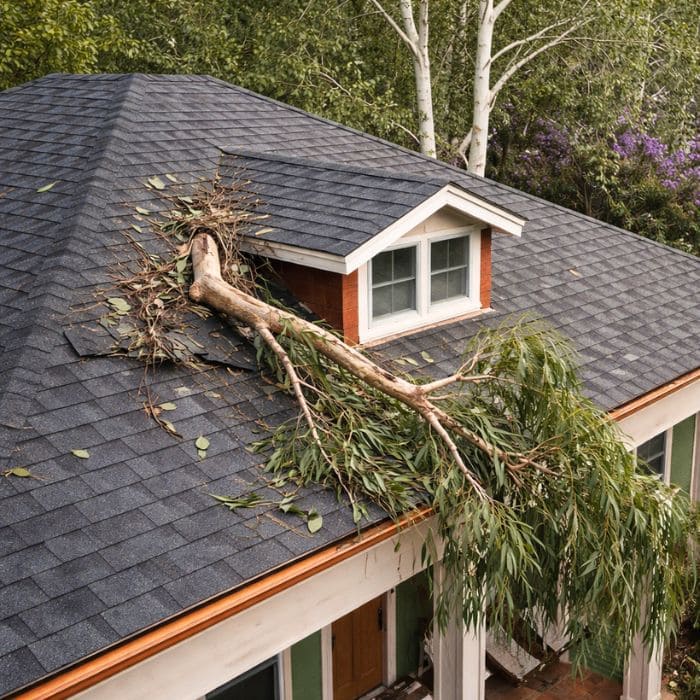
At approximately 2:30 a.m., one of the rear Eucalyptus trees failed at the roots. The ground, saturated and softened, gave way, and the tree came down directly onto the back portion of the roof.
No one was hurt, but the damage was immediate and unmistakable.
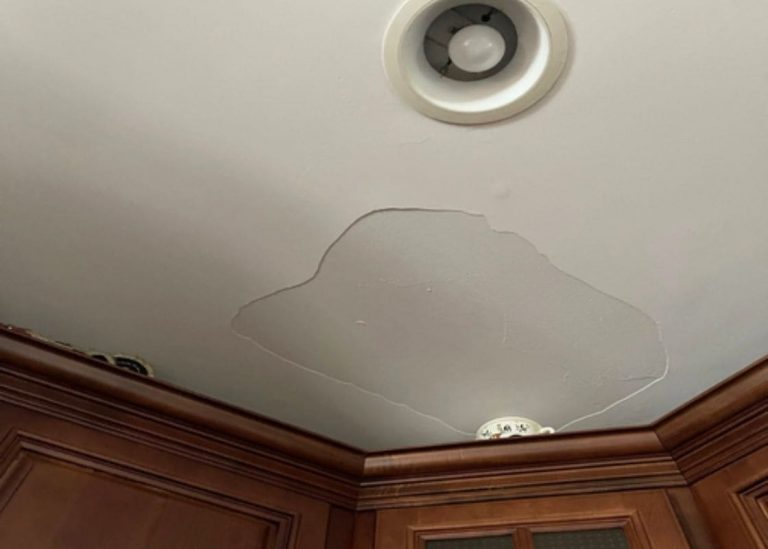
Roof tiles shattered, a supporting beam cracked, and water began dripping into the ceiling of the back bedroom and hallway. The sound alone convinced everyone that the house had been split open.
The next morning, one relative looked at the damage and said, half exhausted, half resigned, “Well, it finally made it inside.”
Insurance, Decisions, and Hard Conversations
My uncle called the insurance company as the first step. It took weeks of documentation, photos from every angle, measurements, and an on-site inspection scheduled three days later.
The adjuster arrived with a clipboard, a camera, and a practiced calm, spending nearly two hours inspecting the roof, attic, and surrounding trees.
He documented water intrusion, structural damage, and most importantly, noted that the remaining trees posed a continued risk.
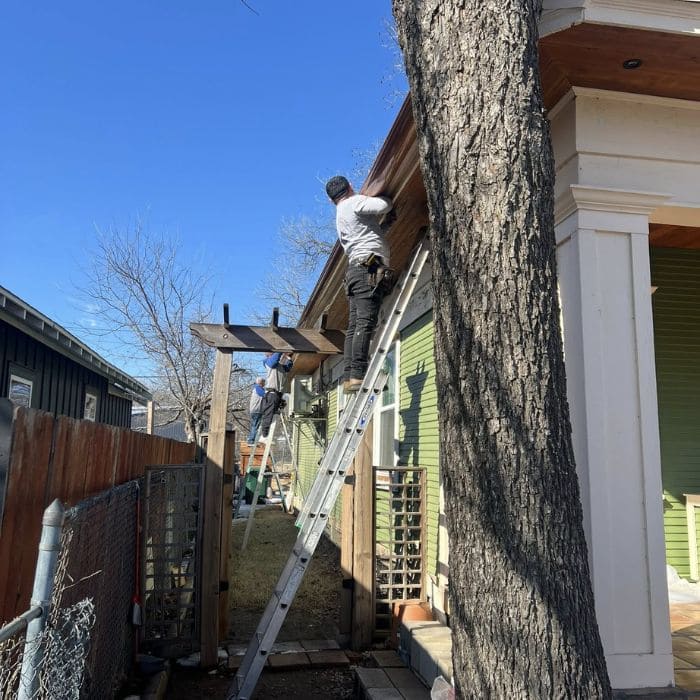
The claim process stretched over six weeks, involving multiple calls, follow-up emails, and estimates from licensed contractors.
Roofing specialists submitted repair quotes, while certified arborists assessed the remaining trees and provided written reports confirming that both the Tipuana and the second Eucalyptus could fail under similar conditions.
Insurance agreed to cover the roof repair and removal of the fallen tree, but the decision to remove the remaining three trees required a separate approval process.
Additional paperwork followed, including municipal permits and safety plans, because removing mature trees in a residential neighborhood is never quick or quiet.
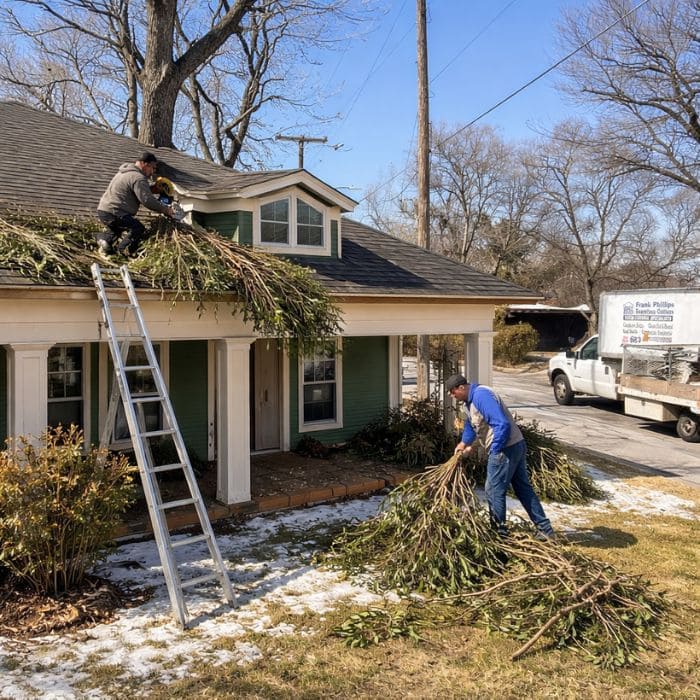
When the cutting finally began in early spring, the crew arrived at 7:30 a.m. sharp, three trucks parked carefully along the curb, chainsaws humming by eight.
The work took two full days, with ropes, harnesses, controlled branch drops, and constant communication between the climber in the tree and the crew below.
The House Without Its Shadows
When the last tree was removed and the yard was cleared, the house looked unfamiliar, not naked exactly, but suddenly visible in ways it had not been for decades.
Sunlight reached the walls evenly. The roofline appeared clean and uninterrupted.
The gutters, newly replaced with copper channels, reflected the afternoon light instead of hiding beneath leaves. For the first time in years, rainwater moved where it was supposed to go.
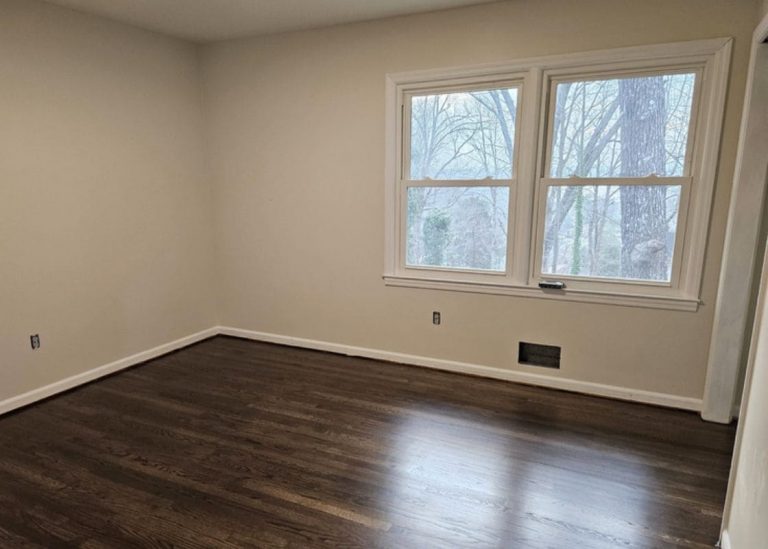
Inside, rooms felt brighter without being harsher. The back bedroom, once dim even at noon, now caught morning light through its windows.
The hallway no longer smelled faintly of damp wood after storms. The house felt relieved.
It took time to adjust emotionally. There was a quiet grief for the trees, but also a deep sense of safety that had been missing without anyone naming it.
Why I Share This Story
I am not sharing this house to sell it, I am sharing it because houses like this hold lessons that listings never mention, lessons about patience, attachment, and knowing when something beloved has quietly become dangerous.
This house taught me that history is not just bricks and dates, but decisions made slowly, often reluctantly, and usually with love at the center.
It reminds me that caring for a home sometimes means letting go of parts of it, even parts that grew alongside your childhood.