The Staircase That Changed the Whole House
ADVERTISEMENT This house sits on a narrow, tree-lined block less than five minutes from mine, in a neighborhood that began filling in around 1905-1915. It lies in a slight rise in the street, brick sidewalks with uneven edges, and lots that were clearly divided before anyone imagined garages or open floor plans. ADVERTISEMENT The owner,…
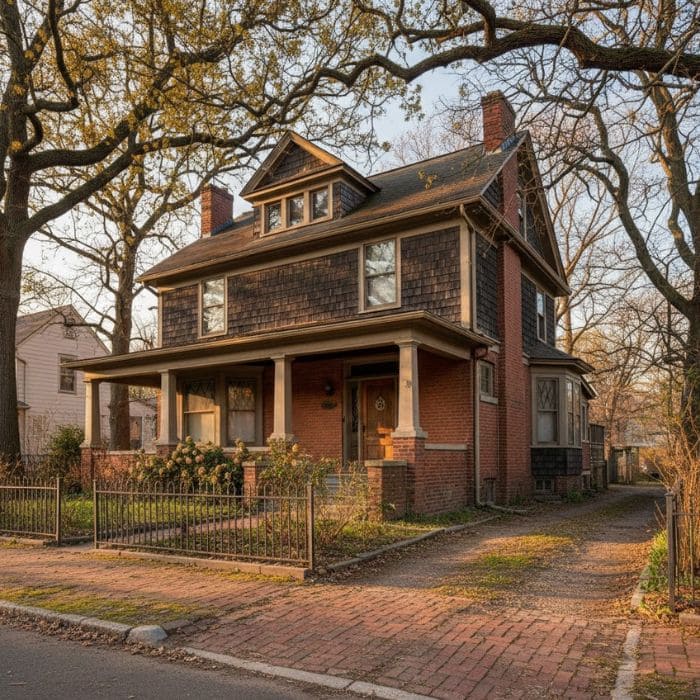
This house sits on a narrow, tree-lined block less than five minutes from mine, in a neighborhood that began filling in around 1905-1915.
It lies in a slight rise in the street, brick sidewalks with uneven edges, and lots that were clearly divided before anyone imagined garages or open floor plans.
The owner, Elliot, bought the house three years ago after renting newer units that never quite held heat properly in winter or quiet in summer.
He works as a technical project manager for a regional engineering firm, splitting his week between remote work and two in-office days downtown.
When he asked me for advice before making an offer, I told him something I repeat often with older houses: the most important features are rarely the ones listed in the online photos.
In this case, it was the staircase.
The Staircase as It Originally Stood
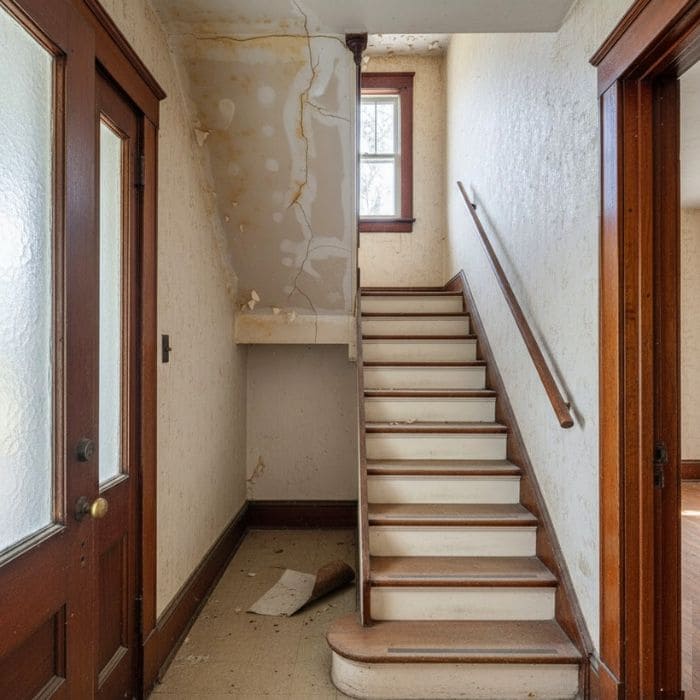
From the front door, the staircase rose immediately on the right, tight against the wall, climbing steeply to the second floor with narrow treads averaging just under 9 inches deep and risers that varied from 7 1⁄4 to almost 8 inches, depending on the step.
That inconsistency alone was enough to make it uncomfortable, but there were other clues that something was off.
The handrail had been replaced sometime in the late 1960s or early 1970s with a thinner profile that did not match the original trim, and the underside of the stairs had been boxed in with drywall, creating a low ceiling over the hallway that measured just under 6 feet 6 inches at its lowest point.
At first, Elliot accepted these quirks as part of the house’s character.
He lived with them for nearly a year, adjusting his steps, learning which side of the staircase felt safer, and unconsciously slowing down whenever he carried anything heavy upstairs.
The Moment the Problem Became Impossible to Ignore
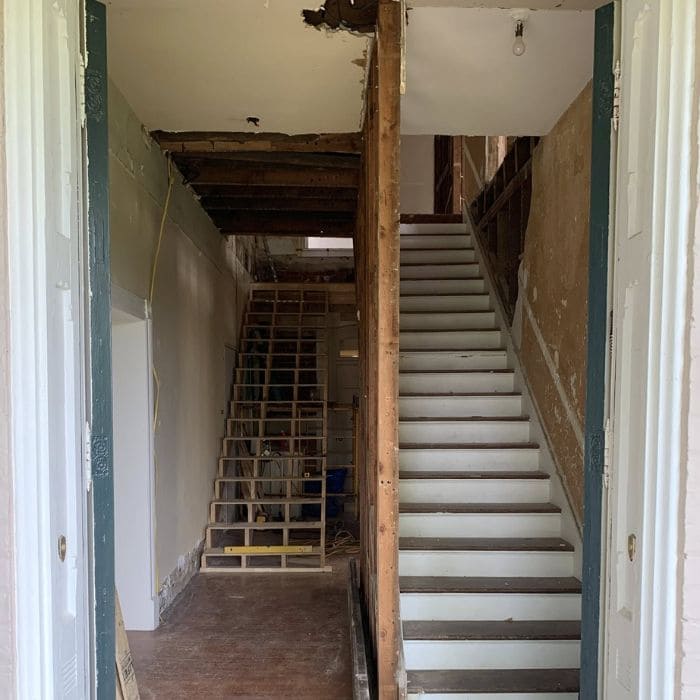
The turning point came when Elliot repaired a minor plumbing.
A leaking line above the hallway required opening the ceiling beneath the stairs, and once the drywall was removed, the framing told a very different story than the one visible from the surface.
One of the original stair stringers had been notched deeply to accommodate old wiring, and a secondary support added later was undersized and improperly fastened.
A joist nearby showed evidence of past water exposure, likely from an earlier leak that had been patched rather than repaired fully.
None of this meant the staircase was about to fail, but it did mean it was no longer doing its job correctly.
Elliot called me that afternoon, drywall dust still settling in the hallway, asking the kind of question homeowners only ask when they already know the answer: “Is this something I can just fix in pieces?”
Choosing to Open the House Completely
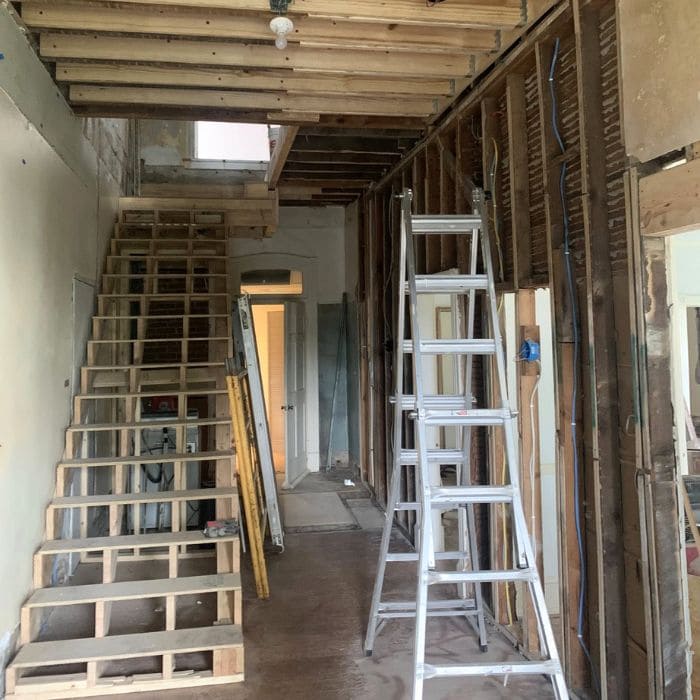
We talked through options carefully, including cost, disruption, and long-term impact. Cosmetic changes would not solve structural issues, and partial fixes would make future repairs more complicated and more expensive.
Within a week, Elliot made the decision to fully open the staircase, removing finishes, exposing framing, and addressing the structure all at once.
Demolition began the following month and lasted just under three weeks, during which the house was effectively split in half.
The stairs were stripped down to their bones, revealing original pine joists, later fir additions, and decades of layered decisions made without a single cohesive plan.
Electrical lines ran where space allowed rather than where they should have. Plumbing cuts had weakened framing members.
The staircase itself had been altered at least twice, each time sacrificing consistency for convenience.
Rebuilding With Precision, Not Excess
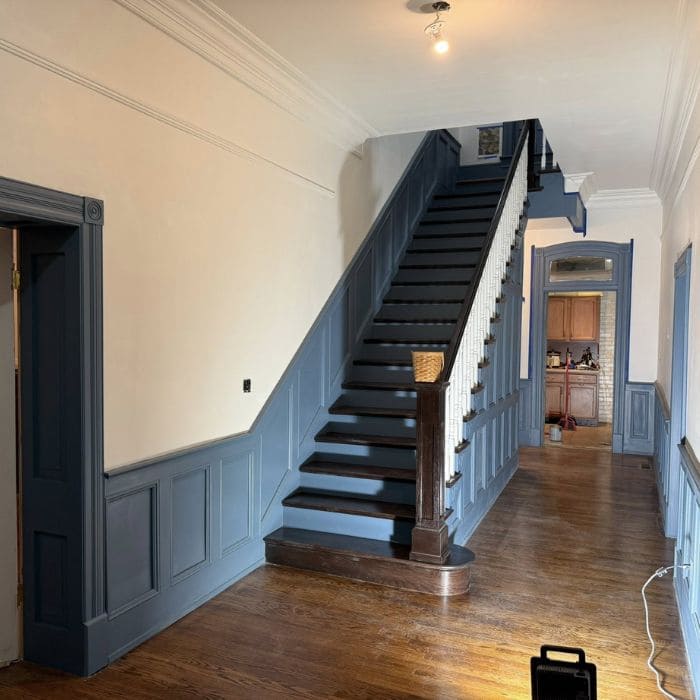
New stringers were fabricated to ensure uniform riser height at exactly 7 3⁄4 inches and tread depth of 10 1⁄4 inches, improving comfort while staying visually appropriate for the era.
Head clearance was increased to just over 7 feet, which required careful adjustment of framing above without changing the roofline or exterior profile.
The railing design was based on surviving elements from neighboring houses built around the same time, with square newel posts and a handrail profile scaled to match the original trim width found elsewhere in the house.
Materials were chosen deliberately, favoring solid wood over engineered substitutes, even when the latter would have been cheaper.
From start to finish, the stair rebuild took just over eight weeks, including inspections and final finishing, and accounted for roughly 18 percent of the total renovation budget, more than Elliot initially expected but far less than it would have cost to fix piecemeal over time.
How the House Changed Afterward
Once the new staircase was installed and finished, the difference was immediate and unmistakable.
The hallway felt wider, not because it was physically larger, but because the ceiling no longer pressed downward.
Light traveled farther from the front windows into the center of the house. Upstairs rooms felt easier to access, no longer separated by a climb that demanded attention.
This Is a Story Worth Sharing
Many owners of older homes live with stairs that are uncomfortable, unsafe, or structurally compromised because they assume that is simply how old houses are.
In reality, many of these issues are the result of decades of shortcuts layered on top of one another, not original design intent.
A staircase is not decorative; it is a structural system that affects circulation, safety, and how a house ages. Fixing it properly changes how a home feels at every level, even when nothing else moves.
Standing in Elliot’s hallway now, it is difficult to remember how tentative the space once felt.
The staircase no longer announces itself, and that is precisely the point. It works quietly, carrying the house forward into its next century without asking for attention, which is exactly what good construction has always done best.