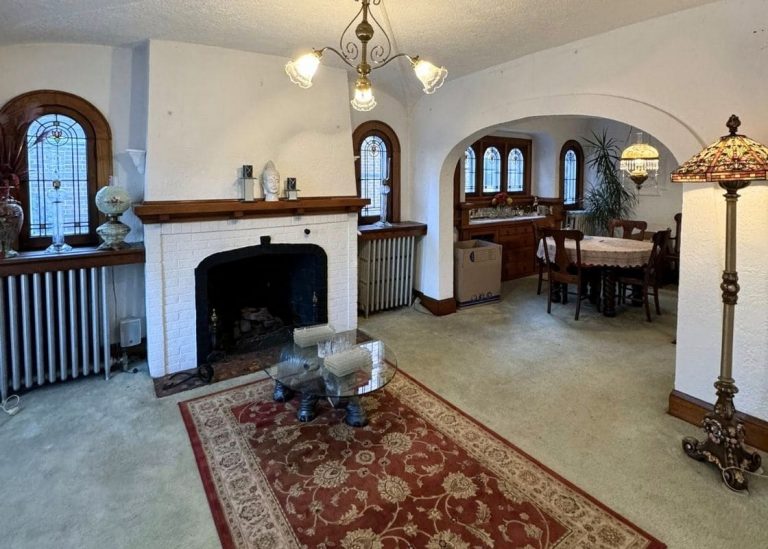
A Kitchen I Almost Forgot in My Phone
ADVERTISEMENT Last Sunday morning, I was sitting in my usual corner at a small coffee shop just off the main road, the kind of place where the tables wobble slightly and no one minds if you stay longer than you should. Outside, the sky was gray but bright enough to promise the day would eventually…

Last Sunday morning, I was sitting in my usual corner at a small coffee shop just off the main road, the kind of place where the tables wobble slightly and no one minds if you stay longer than you should.
Outside, the sky was gray but bright enough to promise the day would eventually clear, and inside, the smell of dark roast and toasted bread made time feel slower.
I wasn’t working, not really. I was just letting my mind wander while my phone sat open in my hand, scrolling through old photos without intention.
That’s when I saw it. A kitchen I hadn’t thought about in years appeared on my screen, and for a moment, I honestly wondered why it felt so familiar before it hit me all at once.
I laughed out loud, the kind of surprised laugh you can’t stop, because there it was, frozen in time, exactly as I remembered it, even though eight full years had passed since I last stood in that room.
This was Marry’s kitchen.
The House Near the Quiet Shore
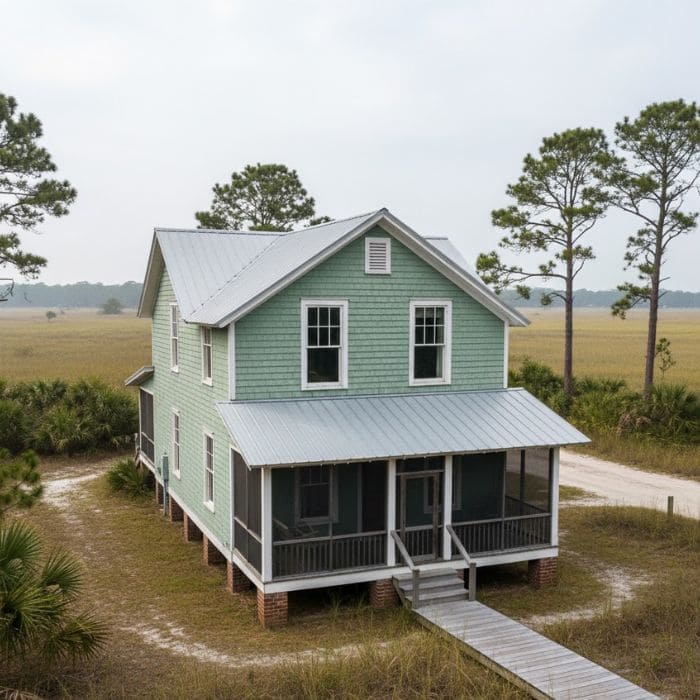
Marry bought her house near Apalachicola, Florida, in a small coastal neighborhood that most people pass right through without realizing it exists.
It wasn’t near a commercial beach, no boardwalks, no souvenir shops, no crowds.
Instead, it sat tucked behind long stretches of marshland and pine trees, where the air always carried a hint of salt and damp earth, and the evenings were quiet enough that you could hear boats idling far out on the water.
The house itself had been built in the early 1940s, solidly framed with materials chosen for survival rather than style, back when homes along the coast were expected to endure humidity, storms, and time without complaint.
The rooflines were simple, the windows placed deliberately to catch cross-breezes, and the floors, worn but resilient.
When Marry first bought it, the house needed attention, but not rescue.
It had good bones, honest wear, and that feeling you get when a place has been lived in carefully, even if not always stylishly.
The Kitchen That Was Loud Before It Was Honest
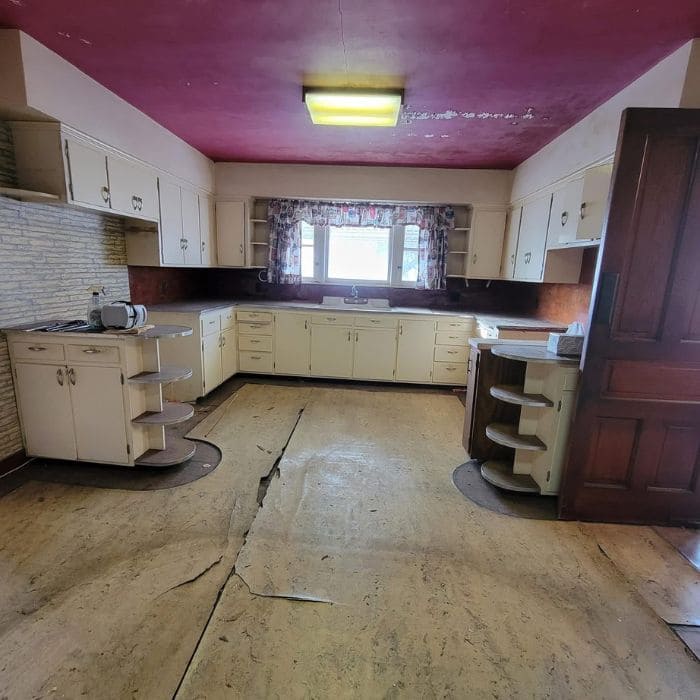
The kitchen, however, was impossible to ignore.
Red ceiling tiles, some cracked and sagging, dominated the room the moment you stepped inside. The linoleum floor had faded unevenly, peeling at the seams where moisture had crept in over the years, and the walls carried layers of paint that had long since stopped pretending to be fresh.
Marry stood there the first day we walked through together, arms crossed loosely, eyes moving slowly from corner to corner, and said something that stuck with me: “I know it looks like too much, but I feel like the room is trying to say something.”
That’s the kind of sentence you only hear from someone who’s willing to listen.
Peeling Back Without Erasing
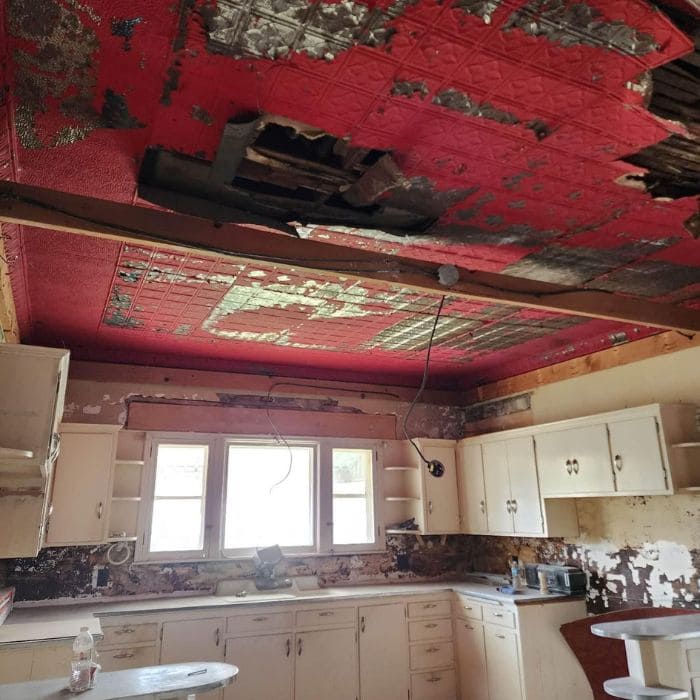
Once we began removing layers, the kitchen started revealing itself piece by piece, and what we found underneath made the noise worth tolerating for a while.
The maple floors were original, laid plank by plank decades earlier, worn thin in places but still strong, still capable of carrying another lifetime if treated properly.
The cabinets weren’t prefab or modular, but built in place, solid wood boxes anchored directly into the structure of the house, designed to stay where they were forever.
The ceiling, hidden under red tiles, had taken damage over time, especially from coastal humidity, but the structure beneath was sound. It didn’t need replacing, just respect.
We talked about what the kitchen should feel like, not what it should look like.
Mornings with windows open. Bare feet on wood floors. Coffee brewed slowly while light shifted across the room. Something calm enough to match the pace of the town itself.
Materials That Could Handle the Coast
Living near water changes how you choose materials, whether you realize it or not. Salt air finds every weakness, and humidity never fully leaves.
That’s why we decided early on to invest where it mattered most, even if it meant spending more up front.
The maple floors were sanded carefully, preserving their age instead of erasing it, then stained with special walnut, a tone deep enough to bring warmth but subtle enough to let the grain stay visible.
We sealed them thoroughly, knowing that moisture doesn’t forgive shortcuts.
For the countertops, Marry chose custom walnut slabs, sourced locally and finished by hand.
Walnut holds up beautifully in coastal environments when treated correctly, and the natural variation in each slab added movement to the room without overwhelming it.
The Headboard That Became the Heart
One afternoon, while clearing out the attic, we came across an old wooden headboard tucked behind boxes of forgotten things.
It was scratched, dusty, and unremarkable at first glance, but Marry paused and ran her hand along the edge, noticing the shape, the weight, the craftsmanship.
Instead of throwing it out, we brought it downstairs. That headboard became the hood vent, reworked, reinforced, and finished to match the rest of the kitchen.
It wasn’t decorative for the sake of decoration. It was functional, sturdy, and quietly meaningful, carrying a piece of the house’s past forward in a way no store-bought fixture ever could.
Cabinets That Stayed Where They Belonged
Rather than removing the cabinets, we worked with what was already there. The boxes stayed in place, strong and square after decades of use, while new doors were added to give them a fresh face without sacrificing integrity.
Painted a muted green inspired by marsh grasses and shaded palms rather than ocean blues, the cabinets grounded the room, making it feel connected to the landscape outside.
Open shelving was added sparingly, not for display, but for everyday use, keeping the kitchen practical instead of precious.
The Ceiling That Changed Everything
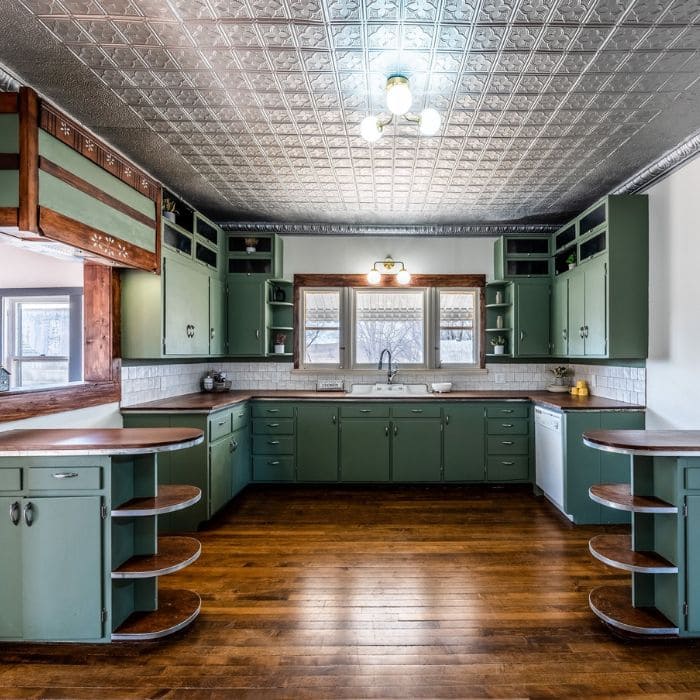
When the damaged ceiling tiles finally came down, the room transformed almost instantly. After repairs, we installed pressed tin panels, bright enough to reflect light but detailed enough to feel intentional.
The ceiling lifted visually, making the kitchen feel taller, lighter, and calmer, even before the lighting was installed.
Simple fixtures with warm bulbs finished the space, casting a glow that softened edges and made the room feel lived in rather than staged.