A 1922 Craftsman Ceiling Taught Me Everything I Know About Beadboard
ADVERTISEMENT This one was a 1922 Craftsman sitting quietly on Warren Avenue, just a few blocks off Lancaster Avenue in Bryn Mawr, Pennsylvania, in a neighborhood where the houses still feel politely competitive about who has kept their original details the longest. I wasn’t the owner of this house, and I wasn’t swinging a hammer…

This one was a 1922 Craftsman sitting quietly on Warren Avenue, just a few blocks off Lancaster Avenue in Bryn Mawr, Pennsylvania, in a neighborhood where the houses still feel politely competitive about who has kept their original details the longest.
I wasn’t the owner of this house, and I wasn’t swinging a hammer either, but I had been following this project closely from the start because the client was someone I had worked with before, and because the restoration team included people I trusted.
The lead on the project was Jack, who has spent over twenty years restoring old and historic homes and has the calm, unshakeable patience of someone who has already seen everything go wrong at least once.
Working alongside him was Elliot, a quiet but brilliant finish carpenter who had a habit of standing back, squinting at a problem, and then offering solutions that sounded too simple to be real, until they worked.
I first visited the house while it was still empty, before anyone moved in, when it smelled faintly of dust, old wood, and that particular metallic scent you only notice when walls are opened up.
The Bedroom That Looked Fine Until It Didn’t
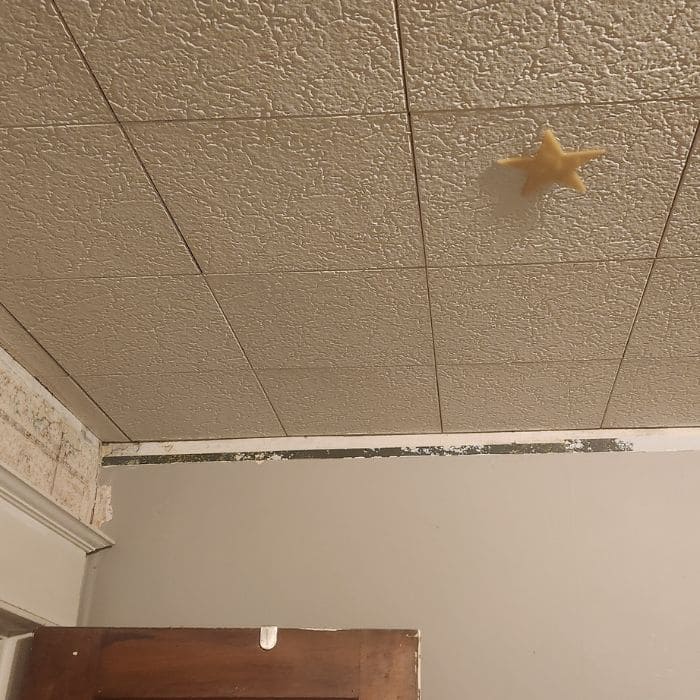
This story centers on a second-floor bedroom, facing the street, with two original windows framed in painted wood trim that had survived multiple generations of repainting.
The room wasn’t large, but it felt balanced, with good light and proportions that made you think it had always known it was meant to be a bedroom.
The ceiling, at first glance, looked completely ordinary. It was covered in styrofoam ceiling tiles, a choice that made perfect sense to someone decades ago and absolutely none to anyone standing there now.
Once the decision was made to remove them, everyone assumed the fix would be straightforward.
Strip the tiles, repair what needed repairing, and install beadboard to keep things consistent with the Craftsman character of the house. That assumption lasted about ten minutes.
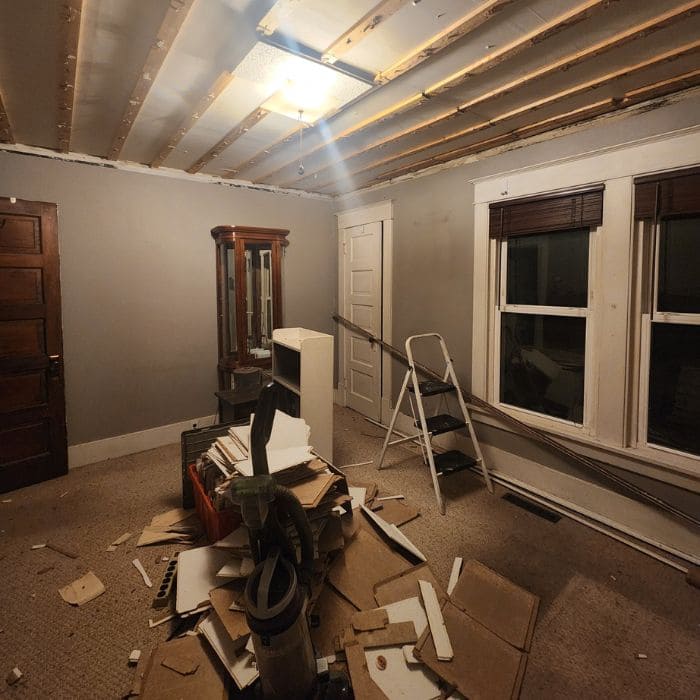
Once the tiles came down, the ceiling revealed itself to be uneven in the subtle, maddening way that only old houses can manage.
Not dramatically sloped, not visibly sagging, but gently inconsistent, as if the house had shifted its weight over the years and never bothered to apologize for it.
Jack ran his hand along one of the exposed seams and said, almost cheerfully, “Well, that explains a few things.”
The Plan That Made Sense on Paper
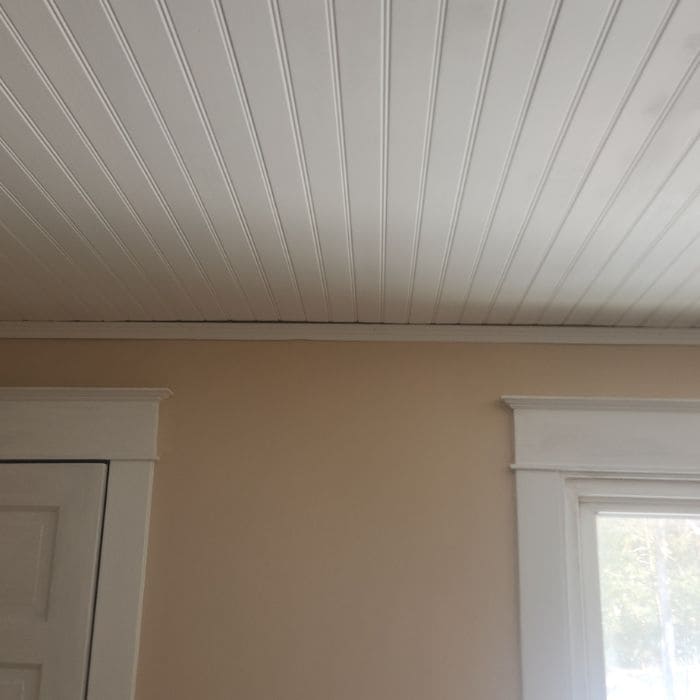
The plan was to install beadboard across the ceiling and then reuse the original trim, which had been carefully removed and labeled earlier in the project.
The trim itself was beautiful, solid wood with profiles you simply don’t find at a big-box store anymore, and everyone agreed it deserved to go back where it came from.
The beadboard installation went smoothly. Elliot handled most of that work, and watching him line everything up was like watching someone solve a puzzle they’d already completed in their head.
Once the boards were in place, the ceiling looked crisp, bright, and respectful of the house’s age.
Then the trim went up. That’s when the ceiling decided to remind us who was really in charge.
Where the Gaps Started Talking Back
As the trim followed the perimeter of the ceiling, small gaps began to appear between the trim and the beadboard. Not dramatic enough to panic over, but noticeable enough that you couldn’t unsee them once you spotted one.
Elliot tried coaxing the trim gently into place, adjusting fasteners and angles, but wood only bends so far before it pushes back. Jack stood in the doorway, arms crossed, watching quietly, which I’ve learned usually means he’s already thinking three steps ahead.
Finally, Mara, another member of the team who specialized in finishing work and had zero patience for bad solutions, broke the silence by saying, “We can make this disappear, but we have to do it the right way.”
The first suggestion, naturally, was caulk.
When Caulk Almost Ruined Everything
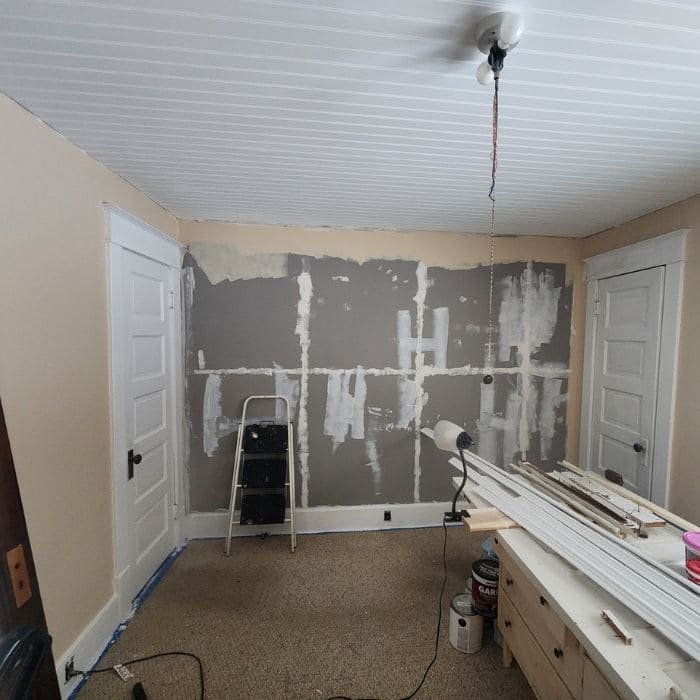
Caulking trim is one of those things that sounds simple and rarely is, especially when beadboard is involved.
The first pass looked acceptable from across the room, but once you got closer, it was clear the caulk had settled into the bead grooves, softening the sharp lines and making the ceiling look heavier than it should.
Mara crouched down, tilted her head, and said, “That’s not bad, but it’s not good either.”
Jack nodded and added, “Beadboard never forgives laziness.”
That’s when Elliot disappeared for a moment and came back with a fine bristle brush and a small bucket with just a little water in it. He explained that instead of smoothing the caulk with a finger or sponge, which pushes material where it doesn’t belong, he prefers to pull it out gently.
He demonstrated by lightly dampening the brush and drawing it from the trim toward the beadboard, letting the bristles lift the excess caulk out of the grooves instead of packing it in.
The Fix That Changed How I Look at Finish Work
As Elliot worked his way around the room, the bead lines stayed crisp, the gaps disappeared, and the ceiling began to look intentional again.
Watching the problem quietly resolve itself, I realized how often people underestimate finishing work, assuming it’s just cosmetic when, in reality, it’s where the house either feels respected or misunderstood.
Jack looked over at me and said, “This is the part nobody photographs, but it’s the part you feel every day.”
That bedroom ceiling taught me that fixing old houses isn’t about chasing perfection, because perfection doesn’t exist in buildings that have lived real lives.
It’s about learning how to respond thoughtfully when things don’t line up the way modern expectations tell you they should.
If you’re planning to fix a ceiling in an older home, especially with beadboard, you need to assume the ceiling will not be level, the trim will resist you, and the solution will require patience more than force.
Use caulk sparingly, control it carefully, and always think about how light will catch the lines you’re creating. Most importantly, step back often, because old houses reward perspective.