My Visit to a Pre-Civil War Home Worth Five Years of Restoration
ADVERTISEMENT Knock, knock, knock. Welcome to my second trip to this house, a place that feels familiar every time I return. This time, I left early in the morning and headed north along County Route 47, passing fields that still smelled faintly of cut hay, before turning onto a quieter stretch known locally as Millstone…
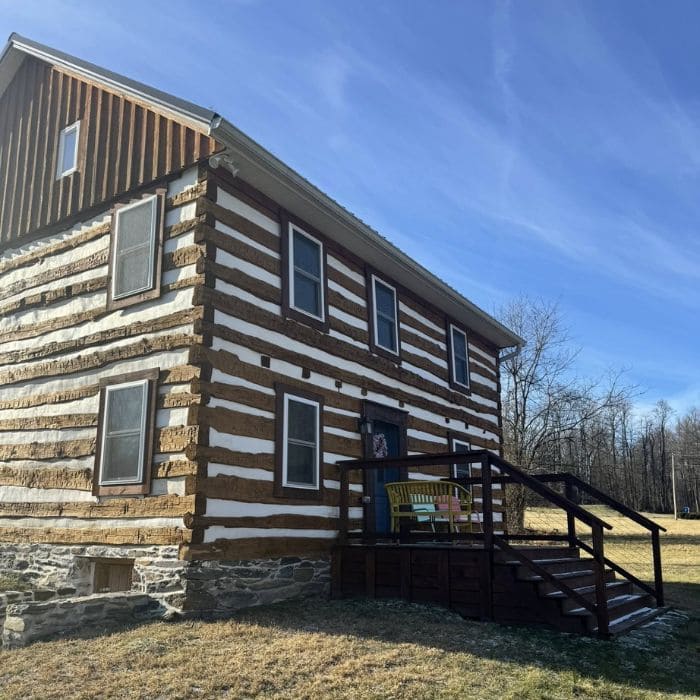
Knock, knock, knock. Welcome to my second trip to this house, a place that feels familiar every time I return.
This time, I left early in the morning and headed north along County Route 47, passing fields that still smelled faintly of cut hay, before turning onto a quieter stretch known locally as Millstone Road.
The house sits near the edge of this road in rural Tioga County, New York, not far from the Susquehanna River, where old farmsteads still outnumber gas stations and everyone seems to know which houses have stories worth telling.
Five years ago, Jack brought me here for the first time. Jack is one of those people who never exaggerates, so when he said, “This one will take years,” I knew he meant it.
He has over twenty years of experience restoring old and historic homes, and I have enormous respect for his work, mostly because he treats every structure like a living thing rather than a problem to solve. This house, built well before the Civil War, took exactly five years to finish.
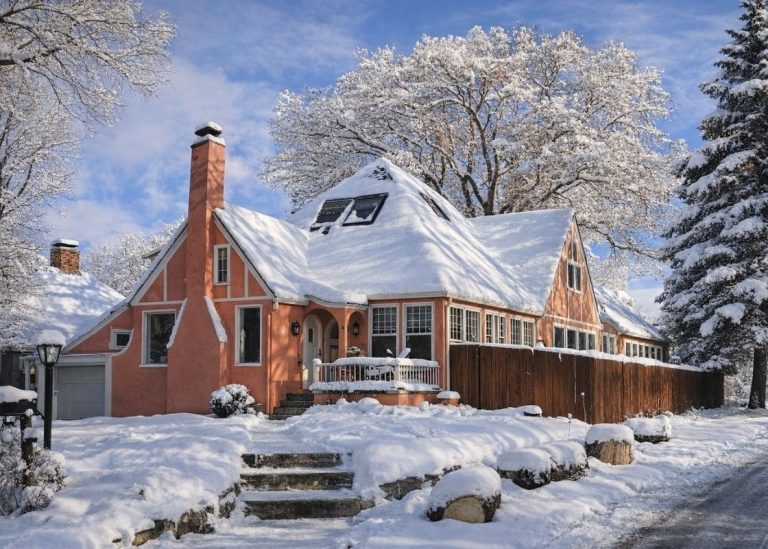
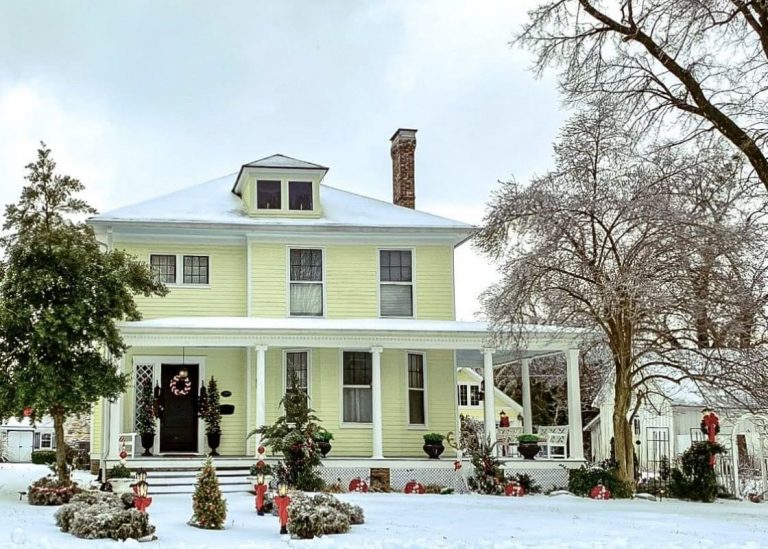
Standing outside now, looking at the restored exterior, it is hard to imagine how fragile it once looked.
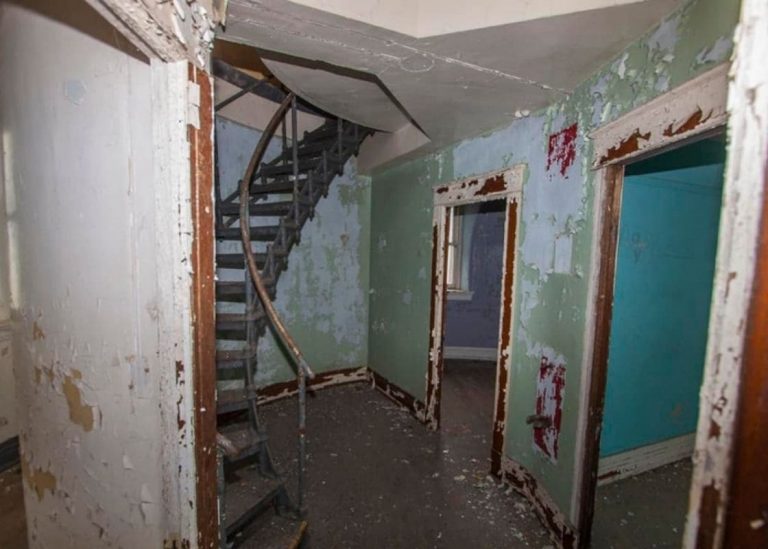
The before photos show a roof sagging slightly, windows clouded by age, and siding that had long ago given up fighting the weather. Today, it looks steady and quietly confident, like someone who has survived a difficult life and comes out calmer on the other side.
The Living Room: Where Stories Sit Down With You
The living room is the first space Jack always insists on showing people, and it makes sense.
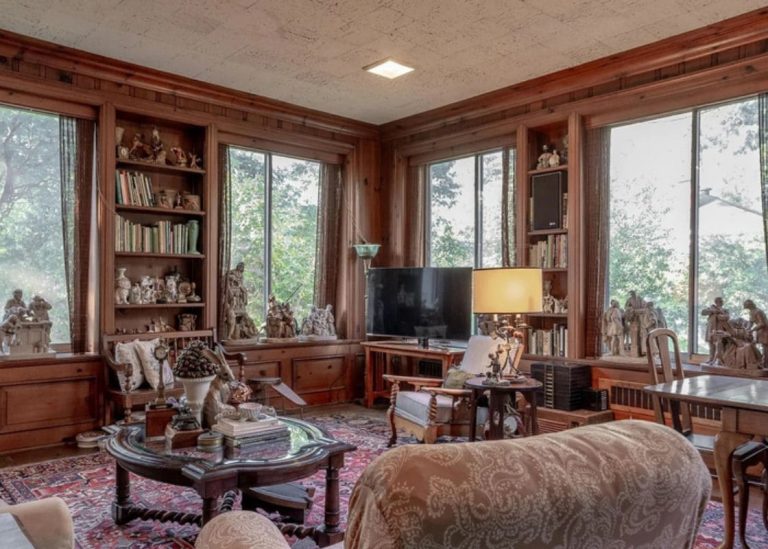
This is where the house seems to exhale. The walls are finished simply, allowing the original proportions of the room to remain intact. Nothing feels oversized or decorative just for the sake of it.
The sofa dominates the room, and Jack noticed my eyes go straight to it, just like they always do. “That thing was a disaster when we found it,” he said, laughing.
The sofa originally came from a farmhouse outside Owego, New York, and had been sitting in a damp storage room for decades.
The springs were broken, the frame was cracked in two places, and the fabric smelled like every year it had ever lived through. Jack’s team debated replacing it entirely, but something about its shape felt right for the room.
They stripped it down to the frame, repaired the wood using reclaimed oak from a dismantled barn in Candor, and rebuilt the seating support by hand.
The upholstery was chosen carefully, not to look new, but to look honest. “If it looks too perfect,” Jack said, “it doesn’t belong here.”
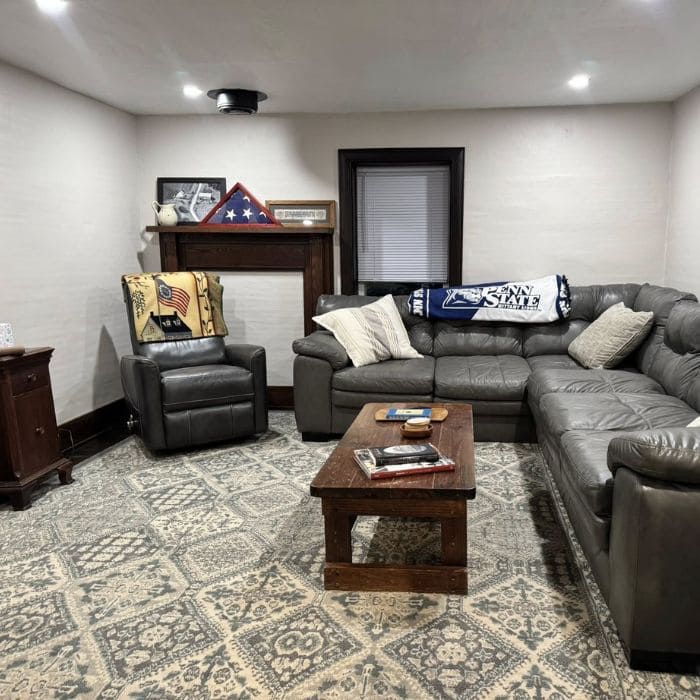
As impressive as the sofa is, I found myself more drawn to the rug beneath it. Jack noticed me crouching down to study the pattern and smiled knowingly.
That rug came from a small village called Cooperstown Junction, nearly two hours away. It was found in a closed textile shop that had been family-run since the 1940s.
The owner had one last shipment of handwoven rugs made from wool and cotton blends, and this was the final piece left in storage. The pattern is traditional but understated, and the muted colors echo the tones of the surrounding wood.
Jack told me it took him three separate trips to convince himself it was the right one, which feels very on brand for him.
The Kitchen and Dining Room: Rebuilding Without Erasing
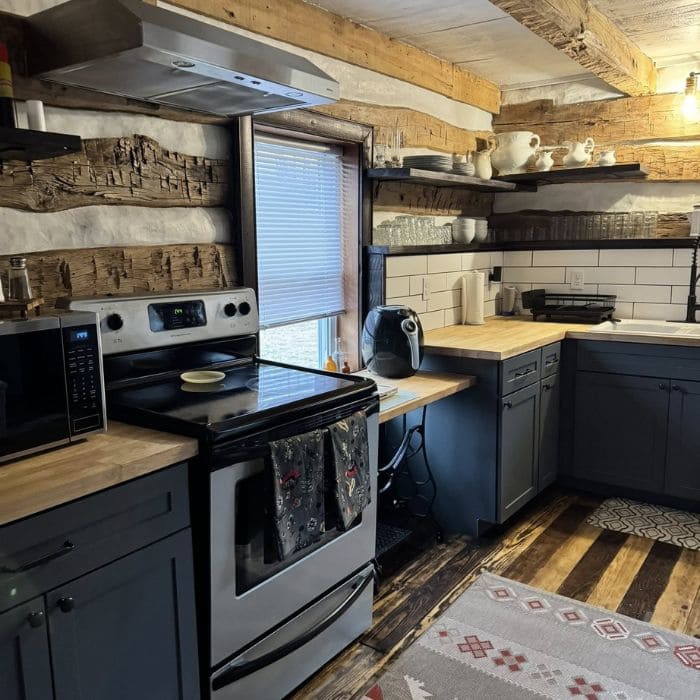
Moving into the kitchen, the atmosphere shifts slightly, but the story continues seamlessly. This room suffered some of the worst damage before restoration.
Nearly every surface had to be replaced, from cabinets to flooring, after years of neglect and moisture exposure. Still, Jack was determined not to lose the soul of space.
One of my favorite details here is the sewing machine base repurposed into functional furniture. It came from an estate sale in Apalachin, buried under boxes and rust.
Jack cleaned it, stabilized the metal, and paired it with a butcher-block top made from maple sourced locally. “Old homes don’t need new furniture,” he told me. “They need furniture that remembers.”
The kitchen shelves hold simple, practical items, many of which replaced pieces that were completely destroyed. White ceramic dishes, sturdy glassware, and hand-thrown pitchers give the room a sense of continuity.
I couldn’t help laughing when I noticed the decorative detail on the wall that looked like musical notes. Jack admitted that the original owners were known for hosting music nights, and he wanted a subtle nod to that history without turning it into a theme.
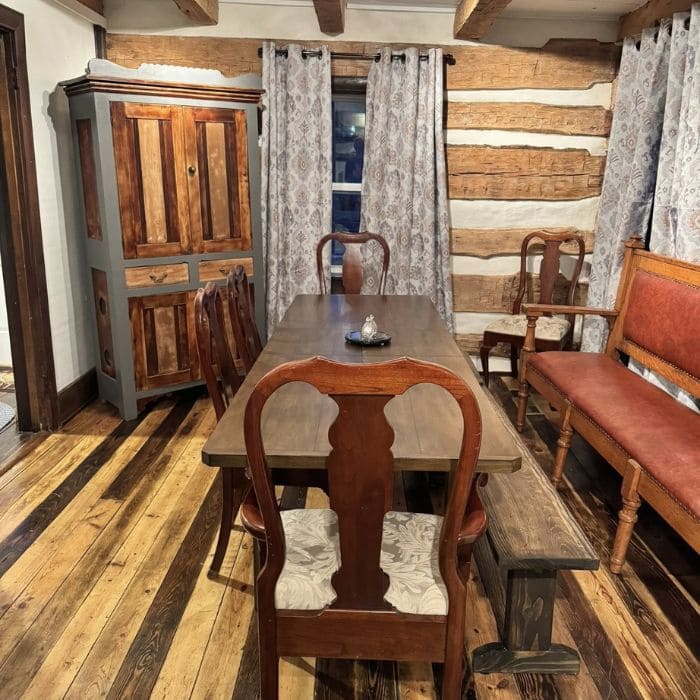
The dining room stays intentionally understated. A solid wooden table sits at the center, flanked by chairs that don’t match perfectly but feel right together.
The lighting is warm, and the space invites conversation rather than performance. It feels like a room meant for everyday meals that accidentally turn into long evenings.
The Staircase: Worn, Honest, and Unchanged
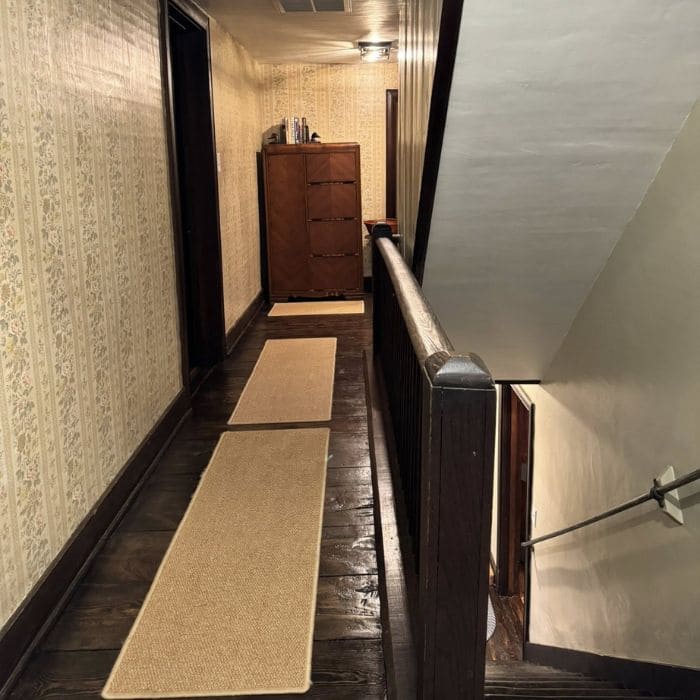
The staircase leading to the second floor remains narrow and slightly steep, just as it was originally built. Jack repaired what was unsafe but refused to modernize it beyond necessity.
The handrail still shows signs of wear where countless hands once slid along it, and walking up feels like moving through layers of time rather than floors.
The Bedroom: An Unexpected Choice That Works
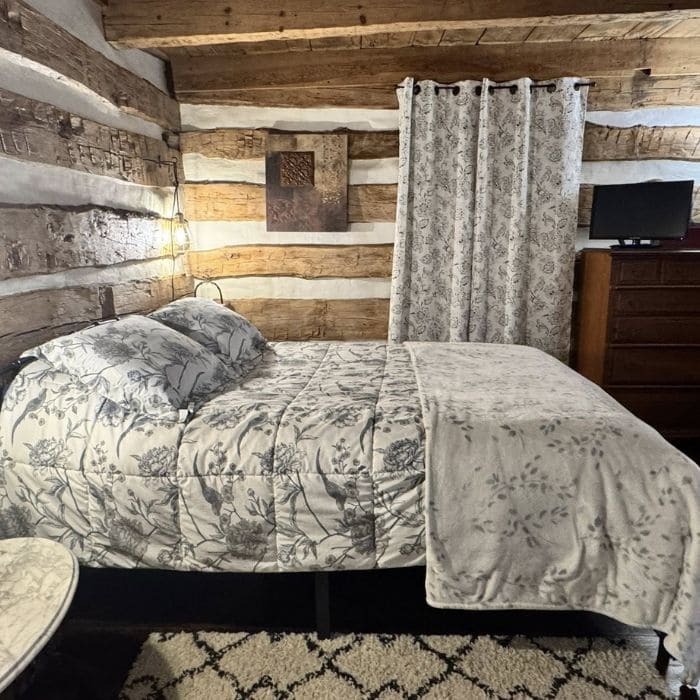
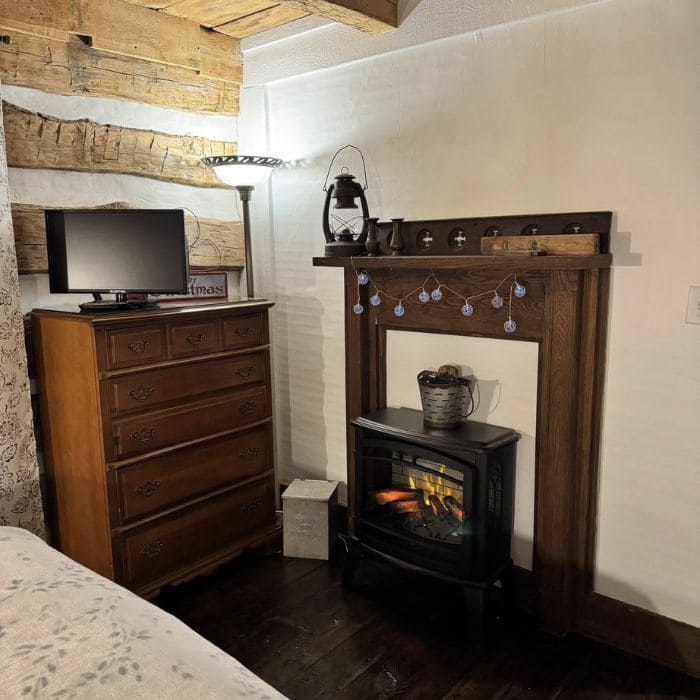
Upstairs, the bedroom reveals a quieter side of the house. The furniture is modest, carefully spaced, and chosen to let the room breathe.
The bed sits comfortably against the wall, framed by exposed beams that remind you of the structure holding everything together.
The electric fireplace is the feature that surprises most visitors. With limited space in the living room, Jack made the unconventional choice to place it here instead.
“This room needed warmth more than the rest,” he said simply. The fireplace casts a soft glow that transforms the room in the evening, making it feel deeply personal and restful.
Behind the bedroom, practical storage areas and utility spaces are tucked away thoughtfully. Nothing intrudes on the calm of the room, and nothing feels forgotten.
Who This House Is For
As I walked back outside, standing once again on Millstone Road, I realized this house isn’t meant for everyone. It’s for people who appreciate patience, who enjoy imperfections, and who understand that restoration is not about perfection but respect.
This is a home for someone who values history, quiet craftsmanship, and spaces that feel earned rather than styled.
Jack locked the door behind us and said, almost casually, “Five years is nothing if you’re doing it right.”